
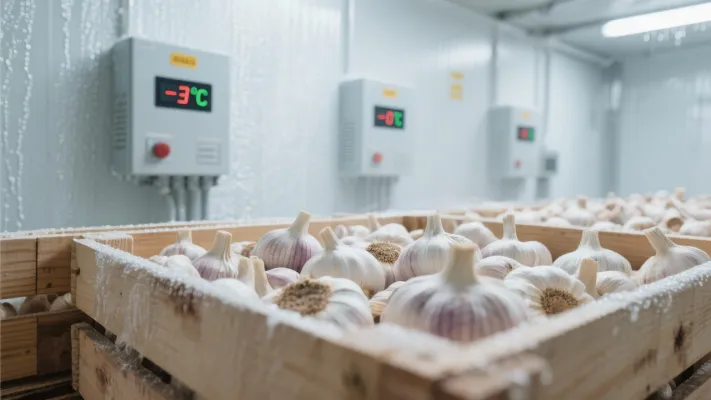
In the global food industry, consistent supply of high-quality ingredients is not just a preference but a critical operational requirement. For garlic—a staple in cuisines worldwide and a key ingredient in food processing—maintaining year-round availability while preserving A-grade quality has long been a challenge. China, as the world's largest garlic producer contributing over 80% of global output, has developed an integrated system that transforms seasonal harvests into a reliable 365-day supply chain. This article explores the agricultural technologies and management practices that make this possible.
"The future of food security lies in the convergence of traditional farming wisdom and digital technology. China's garlic industry demonstrates how systematic innovation can turn seasonal limitations into year-round opportunities." — Dr. Zhang Wei, Agricultural Technology Research Institute, Beijing
The journey to consistent garlic supply begins with strategic seed selection. Chinese agricultural scientists have developed over 20 specialized garlic varieties adapted to different climatic zones, from the temperate regions of Shandong to the subtropical areas of Yunnan. These varieties exhibit remarkable resilience, with some able to withstand temperature fluctuations from -10°C to 38°C, ensuring stable growth across diverse environments.
One standout variety, "Yunxiang No.1," developed for southern regions, has shown a 15% higher yield stability compared to conventional varieties, even during unpredictable monsoon seasons. This targeted breeding program ensures that harvests can be staggered across different provinces, creating a continuous supply pipeline.
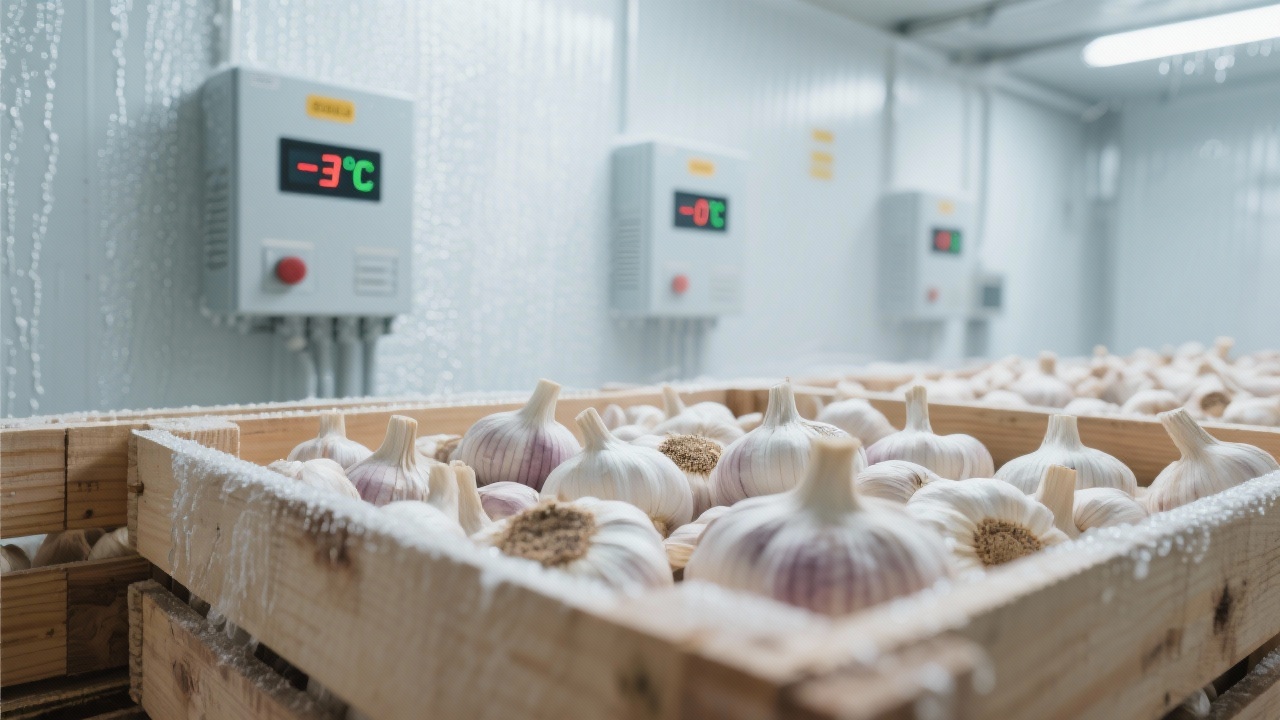
Soil health is paramount for consistent garlic quality. Chinese farmers have refined a 3-year crop rotation system that minimizes soil depletion and pest buildup. This scientifically designed cycle typically includes garlic, followed by legumes to fix nitrogen, then corn or wheat to balance soil nutrients.
Data from Shandong Agricultural University shows that farms implementing this rotation system have experienced a 23% reduction in soil-borne diseases and a 12% increase in average bulb weight compared to continuous garlic cultivation. This sustainable approach not only ensures long-term productivity but also reduces reliance on chemical inputs.
Maintaining A-grade quality requires strict pest control without compromising food safety. China's garlic industry has embraced integrated pest management (IPM) techniques that combine biological controls, pheromone traps, and resistant varieties to reduce chemical usage by up to 40%.
In Jiangsu province, farmers have successfully implemented a push-pull strategy, planting repellent crops around garlic fields while attracting beneficial insects with nectar-rich plants. This method has resulted in 35% lower pest infestation rates and has become a model for sustainable agriculture practices.
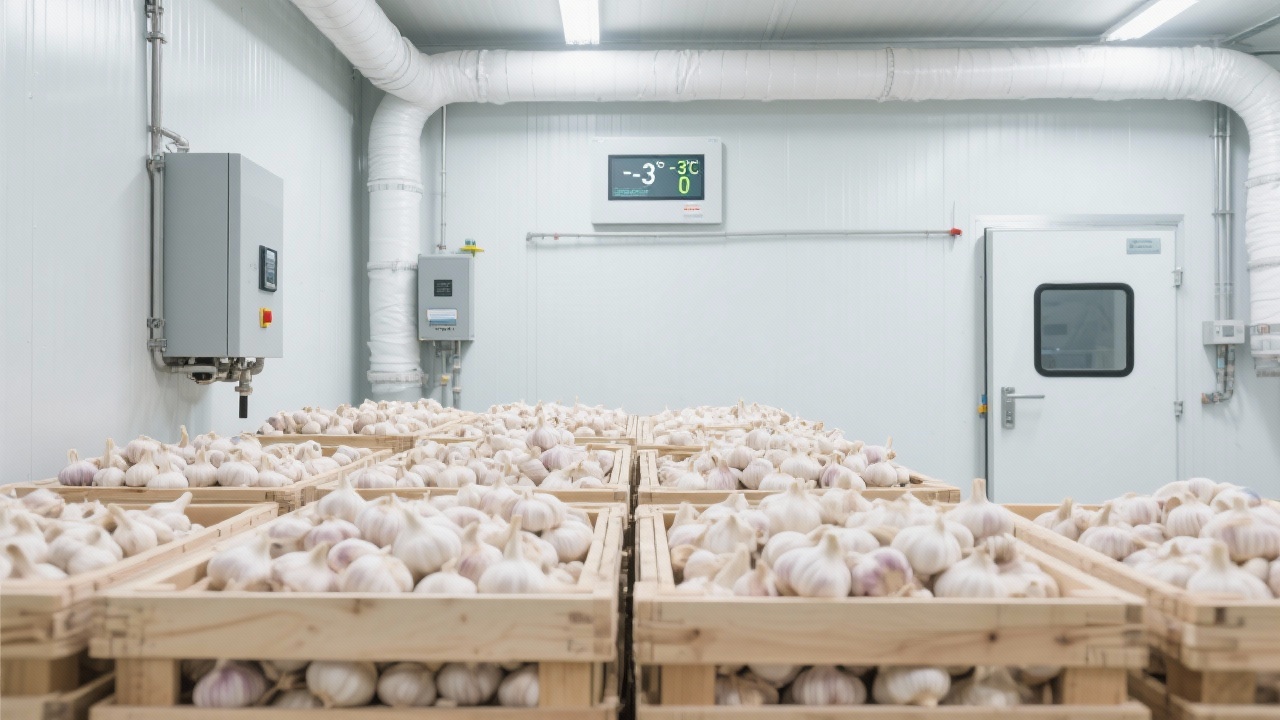
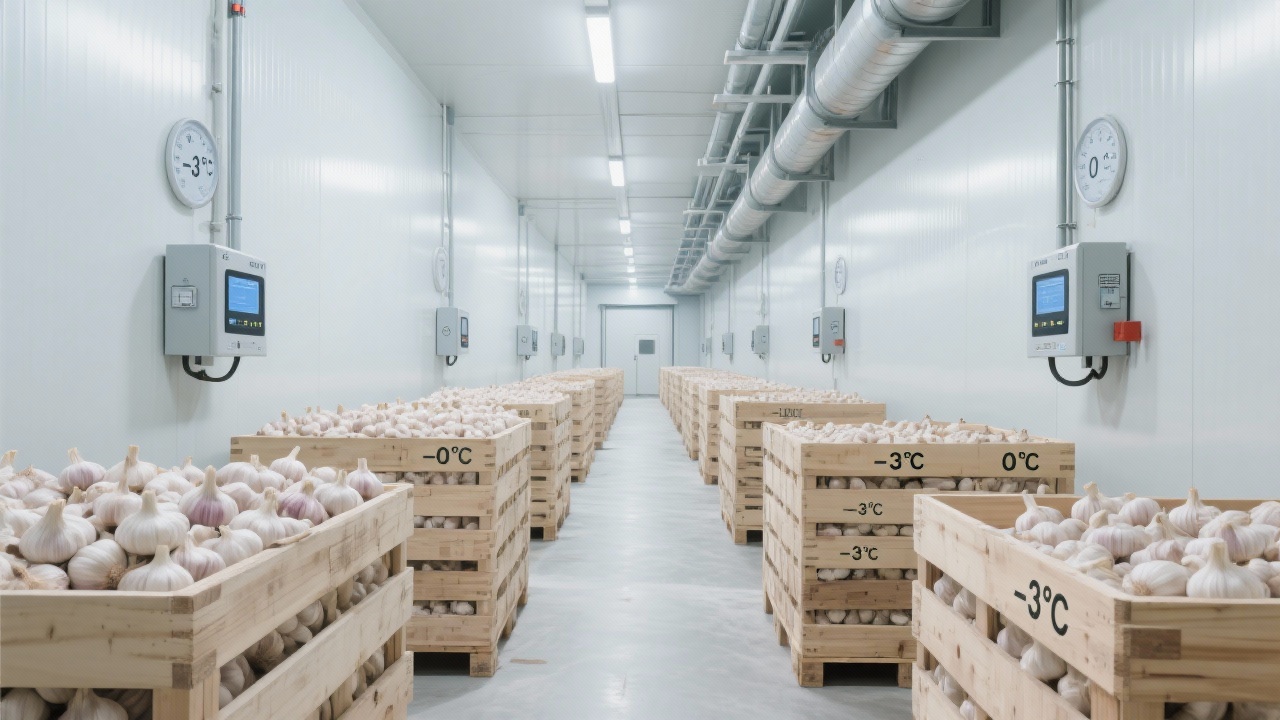
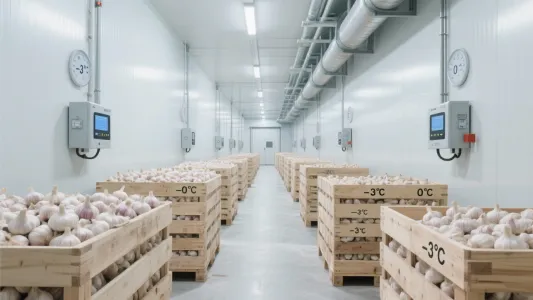
Perhaps the most critical innovation in ensuring year-round supply is China's advanced storage technology. Modern garlic storage facilities employ computer-controlled atmosphere (CA) systems that maintain optimal temperature (0-2°C), humidity (65-70%), and gas composition (2-4% oxygen, 5-7% carbon dioxide). These conditions can extend garlic's shelf life to 8-10 months while preserving its pungency and nutritional value.
Digital monitoring systems track each batch from harvest to出库 (chūkù -出库 means出库 in Chinese, which is 'warehouse exit' in English), with sensors providing real-time data on temperature, humidity, and ethylene levels. This precision reduces post-harvest losses from an industry average of 15-20% to just 5-7% in state-of-the-art facilities.
For food processors and餐饮连锁 (cānyǐn liánsuǒ - which means 'restaurant chains' in Chinese), reliable access to high-quality garlic translates directly to operational efficiency. A study by the China Food Industry Association found that food manufacturers with stable garlic supply chains experienced:
The integration of digital technologies has revolutionized garlic farming in China. From soil sensors that monitor nutrient levels to drones that provide NDVI (Normalized Difference Vegetation Index) data for crop health assessment, farmers now have access to real-time insights that optimize resource use and predict yields with greater accuracy.
Platforms developed by companies like 亿商桥 (Yishangqiao) connect farmers, processors, and exporters through a digital ecosystem, providing transparency across the supply chain. This integration enables better demand forecasting and inventory management, ensuring that quality garlic reaches global markets exactly when needed.
Discover how 亿商桥's integrated garlic supply solutions can provide your business with consistent, high-quality ingredients year-round. Our commitment to agricultural innovation ensures reliable品质 (pǐnzhì - quality) and sustainable partnerships that drive business success.
Explore Our Garlic Supply SolutionsAs global demand for consistent, high-quality food ingredients continues to rise, China's garlic industry serves as a model for agricultural innovation. By combining traditional farming knowledge with cutting-edge technology, the sector has transformed a seasonal crop into a reliable year-round resource. For food businesses worldwide, understanding these advancements is key to building resilient supply chains that can adapt to changing market demands while maintaining the highest standards of quality and sustainability.
 418
|
418
|
 Garlic cold storage guide
Professional cold storage preservation technology
Garlic quality control
Food supply chain management
Low - temperature storage temperature range
Garlic cold storage guide
Professional cold storage preservation technology
Garlic quality control
Food supply chain management
Low - temperature storage temperature range
 461
|
international garlic varieties
10kg mesh bag packaging
garlic selection guide
fresh garlic storage tips
professional kitchen organization
461
|
international garlic varieties
10kg mesh bag packaging
garlic selection guide
fresh garlic storage tips
professional kitchen organization
 146
|
European white garlic sales
White garlic pricing strategies
Promotion campaign design
Market positioning
Packaging and quality certification
146
|
European white garlic sales
White garlic pricing strategies
Promotion campaign design
Market positioning
Packaging and quality certification
 257
|
year-round garlic supply
premium garlic cultivation techniques
cold chain logistics for garlic
European garlic import standards
garlic post-harvest handling
257
|
year-round garlic supply
premium garlic cultivation techniques
cold chain logistics for garlic
European garlic import standards
garlic post-harvest handling
 287
|
fresh garlic quality judgment
foreign trade garlic purchasing guide
garlic storage methods
high - quality garlic selection skills
refrigerated garlic preservation
287
|
fresh garlic quality judgment
foreign trade garlic purchasing guide
garlic storage methods
high - quality garlic selection skills
refrigerated garlic preservation


.png?x-oss-process=image/resize,h_600,m_lfit/format,webp)





.jpg?x-oss-process=image/resize,m_fill,h_200,w_200/format,webp)

.png?x-oss-process=image/resize,h_200,m_lfit/format,webp)





 TikTok
 Facebook