Red Garlic Pickling Techniques for Restaurants: Boost Sauce Complexity and Long-Lasting Flavor
2026-02-14
Tutorial Guide
This guide explains how red garlic can be applied in restaurant pickling to build deeper sauce complexity and improve flavor persistence. It outlines the sensory advantages of red garlic, why it performs well in brines and marinades, and how process variables—salt ratio, acidity, temperature control, oxidation management, and infusion timing—shape aroma release and stability. Step-by-step methods and practical kitchen cases illustrate how chefs use red garlic to enhance layered umami, soften harsh sulfur notes, and extend aftertaste across cold and hot applications. The article also includes quality selection tips for fresh garlic, hygiene and cold-chain recommendations for consistent results, and operational guidance suited to both central kitchens and small restaurants looking for reliable, innovative seasoning solutions.
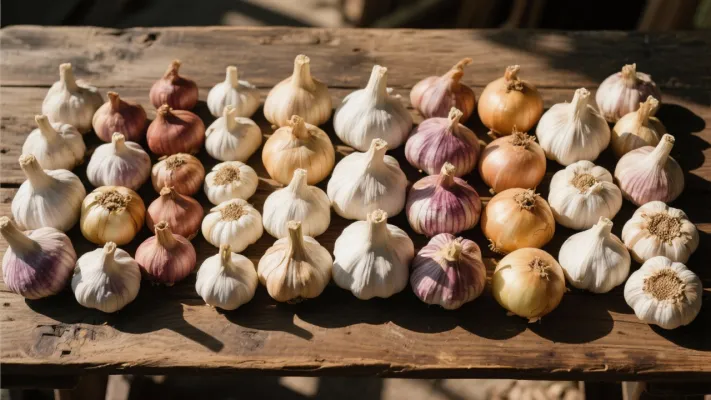
Red Garlic in Restaurant Pickling: Practical Techniques to Build Sauce Depth & Long-Lasting Flavor
In professional kitchens, pickling is not just preservation—it is a controlled flavor engineering process. Red garlic (often produced by acid-driven pigment shifts and gentle curing) brings a distinctive advantage: it can add layered sweetness, softer pungency, and a more persistent aromatic finish than many raw-garlic approaches. This guide breaks down the “why” and the “how,” with measurable parameters, real kitchen workflows, and quality-control notes designed for chefs, R&D teams, and serious home makers.
Pickling technique
Flavor layering
Kitchen consistency
Restaurant-ready SOP
1) What Makes Red Garlic Work So Well in Pickling?
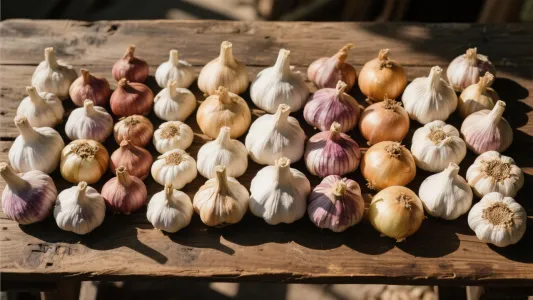
Red garlic’s appeal is not “only color.” In many culinary contexts, the red/pink hue develops when garlic pigments and sulfur compounds react under mild acidity (often with vinegar or citrus) and time. The result is a garlic expression that can feel rounder on the palate, with fewer sharp spikes and more lingering aromatics—ideal for sauces that must stay appetizing over multiple service hours.
Key sensory advantages observed in restaurant trials
| Attribute |
Standard raw garlic in vinegar |
Red garlic-style curing (acid + time) |
Why it matters in service |
| Perceived pungency peak |
High in first 0–2 hours |
Moderate, more even |
Less “bite” fatigue for guests |
| Aroma persistence |
Drops after 6–12 hours |
More stable 24–72 hours |
Better prep-ahead flexibility |
| Sauce “depth” impression |
Single-note sharpness |
Sweet-sour-garlic layering |
Higher repeat-order potential |
| Color contribution |
Little to none |
Subtle red/pink tint |
Visual differentiation on menu |
Note: The stability range depends on acid level (target pH 3.2–3.8 for many cold sauces), storage temperature (0–4°C recommended), and garlic freshness.
2) The Science Chefs Actually Need: Flavor Layering & Persistence
Garlic’s iconic aroma comes largely from sulfur compounds formed when cells are cut or crushed. In pickling, the goal is to keep the aroma present without letting it become harsh or volatile. Red garlic applications tend to succeed when three controls are respected: (1) acid strength, (2) cut size, and (3) oxygen and time.
Control points (quick reference)
- Acid target: for most cold pickles and sauce bases, aim for pH 3.2–3.8. Below ~3.0 can flatten aromatics; above ~4.2 risks dullness and shorter shelf life.
- Salt range: 1.8–3.0% in brine/sauce base helps structure, reduces bitterness, and improves perceived sweetness.
- Cut size: minced garlic gives fast extraction but can turn “spiky”; sliced/whole cloves give slower, longer aroma release—use them like time-release capsules.
- Temperature: cold infusion at 0–4°C improves aroma stability; room-temp bursts can be used for quick turnaround but require stricter time control.
From a practical standpoint, many kitchens notice that sauces built with a two-phase extraction (fast + slow) hold flavor longer. This can be done by combining a small portion of finely processed red garlic for immediate impact, plus sliced or lightly crushed cloves for long-tail aroma.
3) Three Restaurant-Ready Red Garlic Pickling Methods (with SOP Steps)
Method A — “Cold-Crisp” Red Garlic Pickle (Best for topping & bright sauces)
This method prioritizes texture and clean acidity—ideal for noodle shops, grill concepts, deli-style sandwiches, and salad bars where garlic must taste lively without overwhelming.
SOP (batch-friendly)
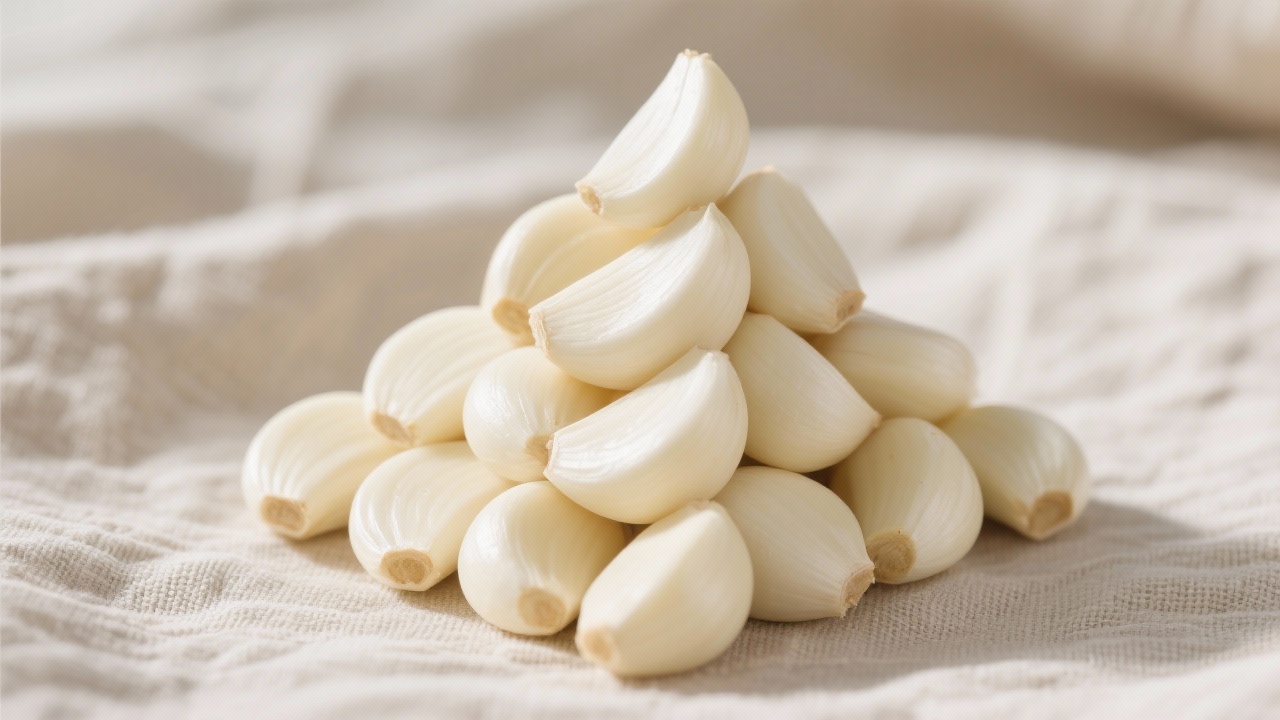
- Prep: peel garlic; keep cloves whole or halved. Rinse quickly and drain thoroughly (excess water dilutes acidity).
- Brine base: rice vinegar or white vinegar + water blend; add salt to reach 2.2% of total liquid weight; optional sugar at 1–2% for balance.
- Acid check: target pH 3.4–3.8. Adjust by small additions of vinegar; re-check.
- Infuse: submerge cloves fully; minimize headspace. Refrigerate at 0–4°C.
- Ready window: light infusion in 12–24 hours; optimal flavor layering at 48–72 hours.
Chef note: For service speed, keep two containers: a “young” batch (24h) for brighter bite, and a “mature” batch (72h) for depth. Blend to match the day’s menu and guest profile.
Method B — Quick “Hot-Pour” Red Garlic for Immediate Service (Best for high turnover)
For outlets that need same-day readiness, a controlled hot-pour can speed infusion while keeping harshness in check. The trick is to heat the liquid—not aggressively cook the garlic.
SOP (speed focus)
- Prepare cloves: lightly crush (do not mince). Crushing accelerates extraction while avoiding the “raw mince spike.”
- Heat the pickling liquid: bring to 75–85°C (not boiling for long). Add salt to 2.0–2.6% and optional sugar to 1%.
- Hot pour: pour over garlic in sanitized container; ensure full submersion.
- Rapid cool: cool to below 10°C within 2 hours, then store at 0–4°C.
- Use window: workable in 4–8 hours; best within 24–48 hours for bright concepts.
Operational tip: Label containers with “pour time” and “target use time.” Consistent timing is often the difference between a signature taste and a “different every day” complaint.
Method C — Two-Phase Extraction Sauce Base (Best for long-lasting aroma)
This is a chef’s method for building depth that holds through refrigeration and repeated opening during service. It is especially useful for dipping sauces, barbecue glaze bases, and “house sour-spicy” sauces.
SOP (layering + persistence)
- Phase 1 (fast note): finely grate a small portion of red garlic into the acid base; rest 20–30 minutes at 0–4°C for quick lift.
- Phase 2 (slow note): add sliced or lightly crushed cloves; rest 24–72 hours for sustained aroma.
- Filter strategy: optionally strain out slow-phase cloves at peak aroma to prevent over-extraction and bitterness.
- Stability checks: keep pH within 3.2–3.8 and store at 0–4°C. Use clean utensils to reduce microbial load.
Many teams report that two-phase bases keep a more “freshly made” impression even after 48 hours in the walk-in, particularly when headspace is minimized and the container is opened less frequently.
4) Keeping Flavor Longer: Techniques That Actually Move the Needle
If a sauce tastes great at prep time but fades by dinner rush, the issue is rarely “garlic quality” alone. Most often it is volatility + oxidation + inconsistent ratios. The following tactics are simple, measurable, and repeatable.
Flavor persistence checklist (restaurant practical)
- Reduce oxygen exposure: use smaller containers during service; refill rather than “open/close” a large tub all day.
- Standardize garlic-to-liquid ratio: many kitchens start testing at 80–120 g garlic per 1 L of pickling liquid, then adjust by concept (bold grill vs. delicate salad).
- Use time as an ingredient: schedule a 48-hour “mature batch” as the baseline and blend with 24-hour for brightness.
- Avoid over-mincing: the smaller the cut, the quicker the peak—and the quicker the drop. Balance with slices/whole cloves for long-tail release.
- Cold chain discipline: every 30 minutes at warm kitchen temps can noticeably accelerate aroma loss. Keep backup portioned sauce refrigerated.
Mini data point: what kitchens typically see
In internal tasting panels used by multi-outlet kitchens, sauces stored at 0–4°C and kept under tight lids often score 15–30% higher in “fresh garlic aroma” after 48 hours compared with identical formulas held at fluctuating prep-station temperatures (e.g., 10–18°C) during repeated service openings.
| Storage practice |
Aroma retention at 48h (relative) |
Common service outcome |
| 0–4°C, sealed, low headspace |
High (baseline 100) |
Stable signature taste |
| 0–4°C, frequent opening |
Medium (70–85) |
Flavor “thins out” mid-shift |
| 10–18°C fluctuating station temp |
Low (55–75) |
Inconsistent guest feedback |
These are practical reference ranges; actual outcomes vary by vinegar type, garlic variety, and container geometry.
5) Real-World Kitchen Scenarios: How Chefs Use Red Garlic to Upgrade Menu Performance
Case 1 — Sour-Spicy Dipping Sauce That Stays “Alive” for 2–3 Days
A casual dining brand struggled with a dipping sauce that tasted sharp on day one, then flat by day two. The adjustment was not a bigger garlic dose—it was extraction design: 30% grated red garlic for immediate lift + 70% sliced cloves for slow release, plus a strict pH target of 3.5. The brand then portioned sauce into smaller service bottles to reduce oxygen exposure.
Outcome reported by the kitchen team: fewer mid-shift “make a new batch” interruptions, and more consistent guest perception of “freshness” across outlets.
Case 2 — BBQ Glaze Base with Cleaner Finish (Less Lingering Harshness)
A grill kitchen found that raw minced garlic created a harsh back note after caramelization. Switching to a cold-cured red garlic pickle base reduced the aggressive edge while keeping aroma in the nose. The glaze held better during holding because the garlic note was distributed across sweet-sour layers rather than a single pungent spike.
A simple rule they kept: avoid boiling garlic in the glaze; build the garlic note in the acid base first, then integrate.
6) Quality & Storage: The Quiet Difference Between “Good” and “Repeatable”
For restaurants and food-service producers, the most valuable outcome is not a one-time delicious batch—it is the ability to reproduce the same flavor daily. That starts with raw material selection and ends with disciplined handling.
Practical quality standards many buyers use
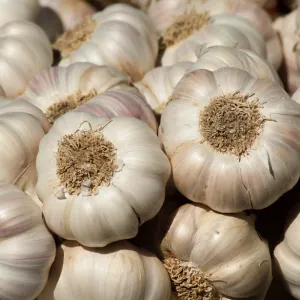
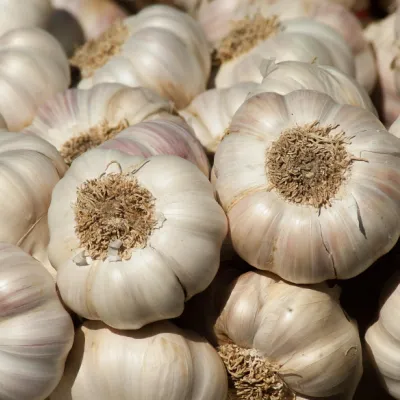
- Freshness: firm cloves, clean skins, low sprout rate; consistent size improves batch math and infusion timing.
- Traceability: harvest lot and packing date support stable flavor planning across seasons.
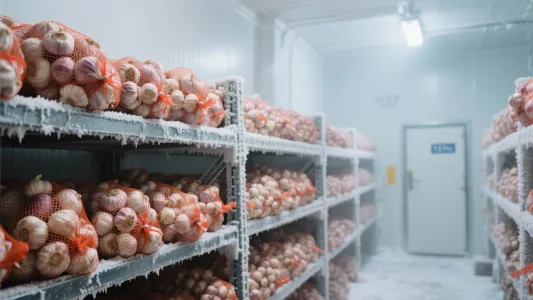
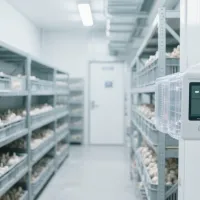
- Cold storage: keep finished pickles/sauce at 0–4°C; use clean utensils; reduce cross-contact risks.
- Rotation: implement FIFO; label by prep time and “peak window” (e.g., 48–72h for mature depth).
7) Quick Q&A (For Chefs Testing Red Garlic Pickling)
Why does garlic sometimes turn pink/red in pickling?
It commonly relates to natural garlic pigments and sulfur chemistry reacting under acidic conditions over time. Temperature, garlic variety, and freshness can change the intensity—so color can be a clue, but flavor control should rely on pH, ratio, and timing.
How can a kitchen reduce harshness without losing garlic aroma?
Avoid over-mincing, use two-phase extraction (fast + slow), and keep the cold chain tight. Many kitchens also find that slightly higher salt within the practical range (around 2.4–2.8% in the base) improves perceived smoothness.
What’s the most common reason red garlic pickles taste inconsistent?
Inconsistent ratios and timing. Small shifts—like adding “a bit more water,” storing at prep-station temperature, or changing cut size—can change extraction speed dramatically. A simple SOP with pH checks and labeled rest times usually fixes it.
Kitchen prompt: What’s your target application—dipping sauce, topping pickle, or glaze base? Share your current pH/ratio and service window, and the next test batch can be designed more precisely.
Need Consistent Red Garlic Performance Across Batches?
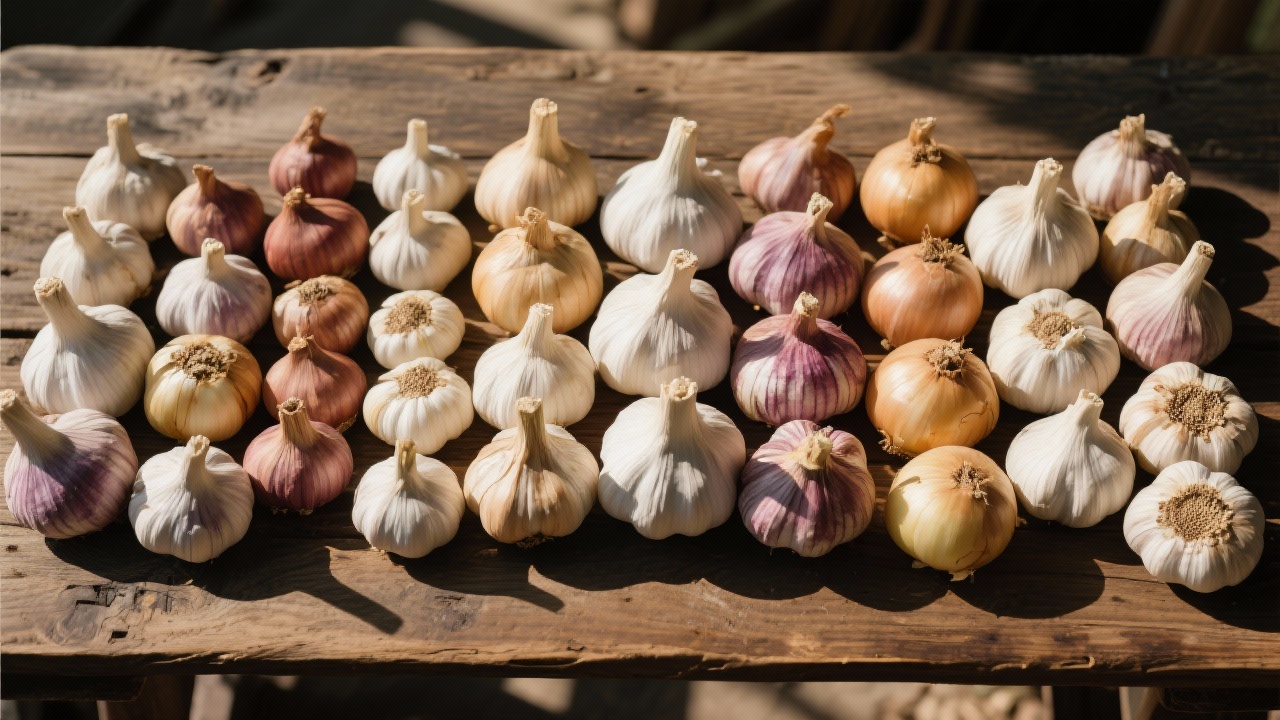
For restaurant groups and food-service producers, the biggest win is not a single great batch—it’s repeatable flavor supported by stable raw material selection, packing discipline, and dependable supply continuity. When garlic quality and sizing are consistent, your pickling SOP becomes easier to standardize across locations.
Explore premium fresh garlic options for pickling & sauce production
Suggested next step: request product specs (origin, grade, size range, packing), and align them with your sauce pH targets and prep schedule.












.png?x-oss-process=image/resize,h_200,m_lfit/format,webp)





.png?x-oss-process=image/resize,h_600,m_lfit/format,webp)
 TikTok
 Facebook