
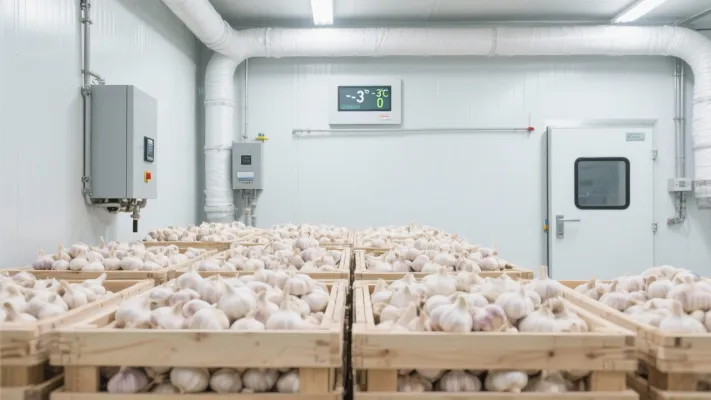
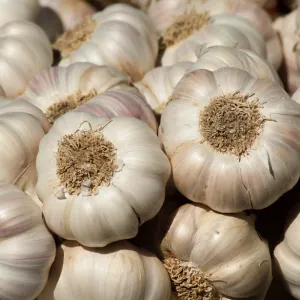
In the highly competitive foodservice industry, the quality of ingredients can make or break a restaurant's reputation. Garlic, a staple ingredient in many cuisines around the world, plays a crucial role in enhancing the flavor of dishes. However, maintaining its freshness and flavor can be a challenge, especially when dealing with large quantities.
According to market research, over 70% of consumers consider the freshness of ingredients as a key factor when choosing a restaurant. This highlights the importance of foodservice providers in ensuring the quality of their garlic stock. A study also shows that poor - quality garlic can lead to up to 20% decrease in customer satisfaction due to the compromised flavor of dishes.
Garlic is a living organism with unique physiological characteristics. It continues to respire after harvest, which can lead to the loss of moisture, nutritional content, and ultimately, flavor. The three main factors that significantly impact garlic's preservation are temperature, humidity, and ventilation.
Temperature affects the respiration rate of garlic. Higher temperatures can accelerate the aging process, causing the garlic to sprout, dry out, or develop mold more quickly. Humidity is also crucial, as excessive moisture can lead to rot, while low humidity can cause the garlic to become desiccated. Ventilation helps remove the heat and humidity generated during respiration, preventing the build - up of ethylene gas, which can speed up the spoilage process.
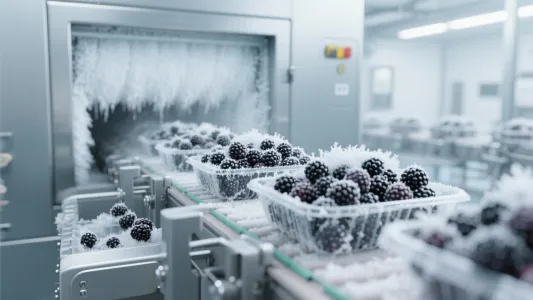
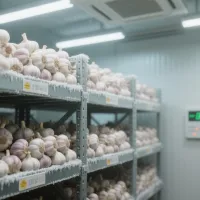
Research has shown that a refrigerated temperature range of 0°C–3°C is ideal for storing garlic. At this temperature, the respiration rate of garlic is significantly slowed down, helping to maintain its freshness and flavor for a longer period. For example, in a 0°C–3°C environment, garlic can remain fresh for up to 6 - 8 months, compared to just 1 - 2 months at room temperature (around 20°C - 25°C).
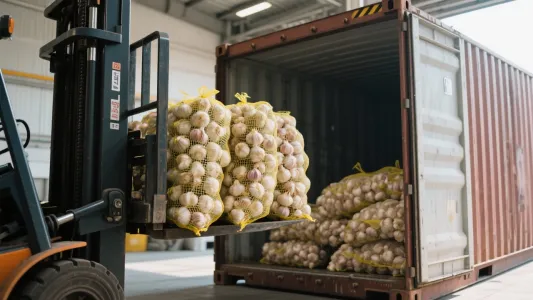
In addition to temperature, ventilation packaging also plays a vital role. Ventilated packaging allows for the exchange of air, preventing the accumulation of moisture and ethylene. This type of packaging can reduce the spoilage rate of garlic by about 30% compared to non - ventilated packaging.
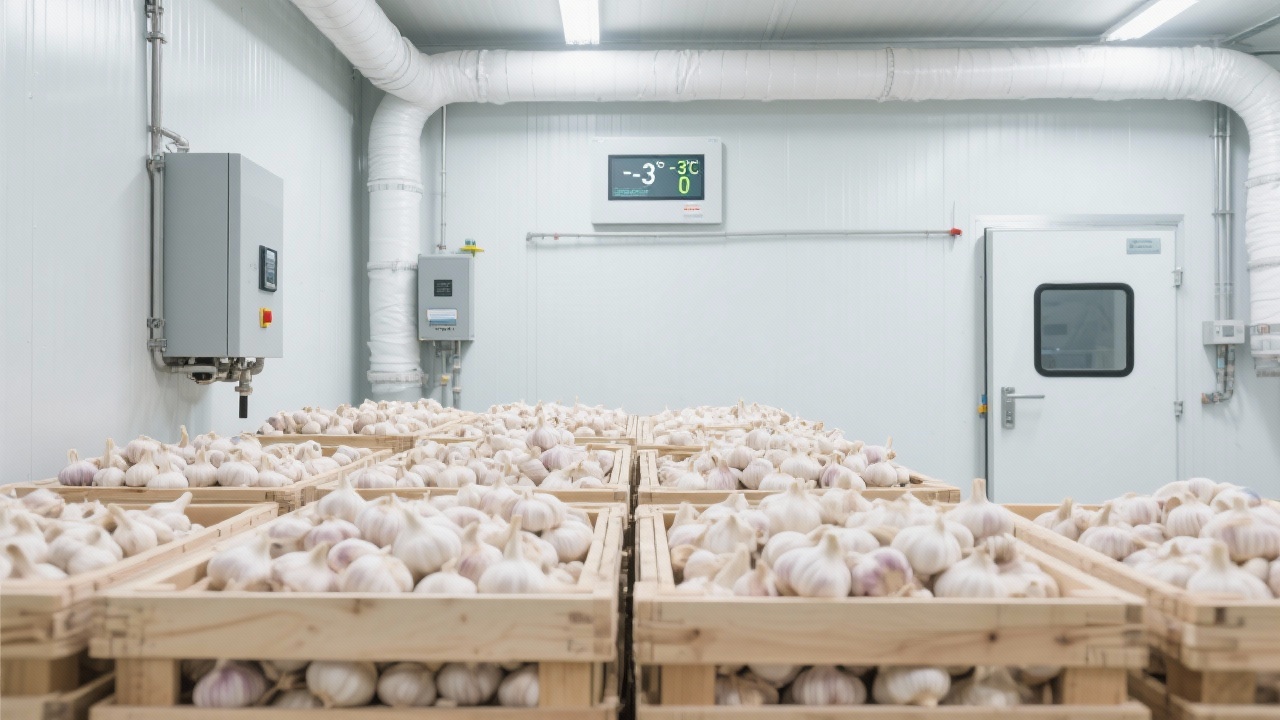
A well - designed standardized warehousing process is essential for maintaining garlic quality. This process should cover storage, handling, and usage.
During storage, it's important to avoid over - stacking garlic, as this can restrict air circulation and lead to uneven temperature distribution. Garlic should be stored in well - ventilated containers or racks. When handling garlic, care should be taken to prevent physical damage, as damaged garlic is more prone to spoilage. In the usage stage, a first - in - first - out (FIFO) system should be implemented to ensure that the oldest garlic is used first.
Many well - known restaurants and chefs have successfully implemented scientific garlic storage methods, resulting in significant improvements in dish quality and cost savings. For instance, a popular Italian restaurant chain in the United States reduced its garlic wastage by 40% after adopting a 0°C–3°C refrigerated storage system and ventilated packaging. This not only improved the flavor consistency of their dishes but also led to a 15% increase in customer satisfaction ratings.
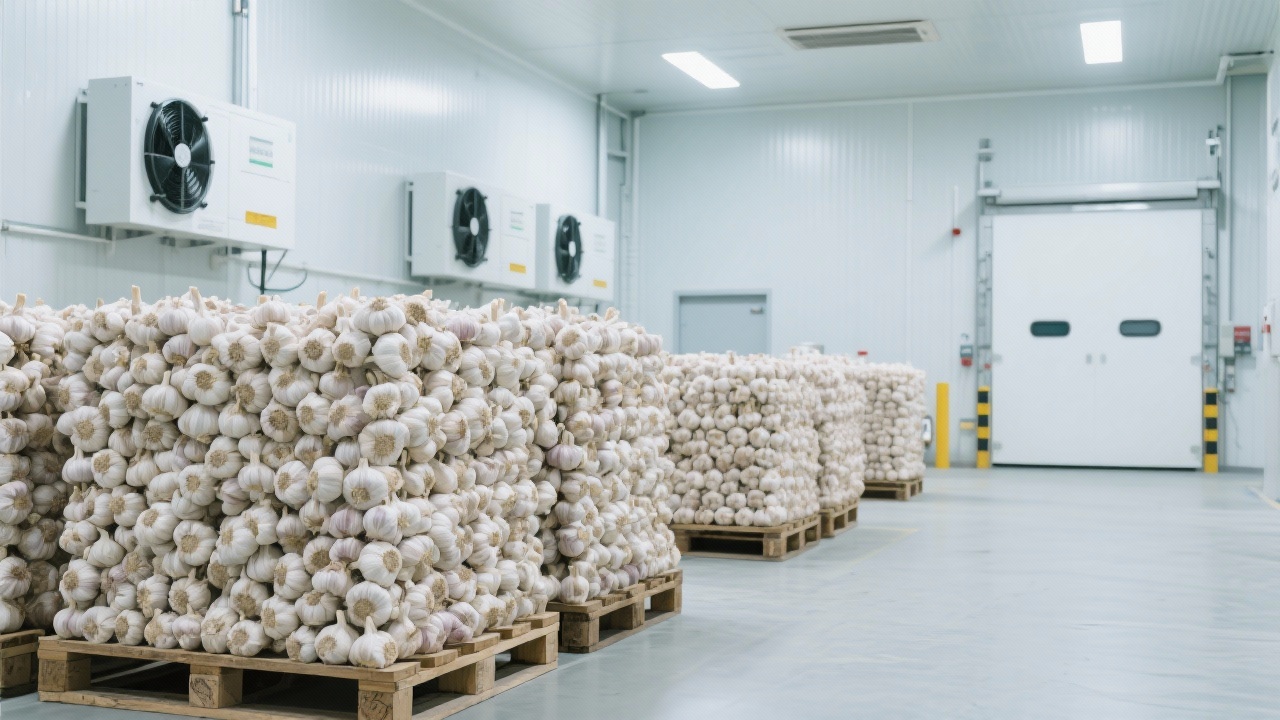
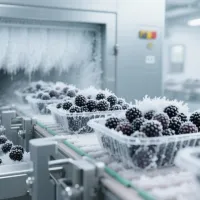
There are several common questions and misconceptions among foodservice professionals regarding garlic storage. One common question is whether it's okay to store garlic in the freezer. While freezing can preserve garlic for a long time, it can also change the texture of garlic, making it less suitable for some dishes.
Another misconception is that sealing garlic tightly in a plastic bag can keep it fresh. In fact, this can trap moisture and ethylene, accelerating spoilage. By providing clear answers to these questions, foodservice professionals can overcome storage challenges more effectively.
To enhance the dissemination and understanding of this knowledge, diverse content presentation forms can be used. Charts can be used to show the relationship between temperature, humidity, and garlic spoilage rate. Flowcharts can illustrate the standardized warehousing process. Short videos can also be created to demonstrate the correct way of storing and using garlic.
Yishangqiao is committed to providing high - quality garlic products that are carefully sourced and stored using the latest scientific methods. Our garlic not only retains its natural freshness and flavor but also meets the strictest quality standards.
If you're looking to elevate the quality of your dishes with premium garlic and improve your foodservice operations, click here to explore our range of garlic products and start your procurement journey today!
 209
|
209
|
 garlic export packaging
mesh bag for fresh produce
cold chain logistics for agriculture
breathable packaging solutions
post-harvest garlic preservation
garlic export packaging
mesh bag for fresh produce
cold chain logistics for agriculture
breathable packaging solutions
post-harvest garlic preservation
 151
|
cold chain logistics for garlic
garlic transport loss reduction
refrigerated storage temperature
HACCP in agriculture
农产品冷链保鲜
151
|
cold chain logistics for garlic
garlic transport loss reduction
refrigerated storage temperature
HACCP in agriculture
农产品冷链保鲜
 306
|
Organic ginger cultivation techniques
Export-quality mold-free ginger
Pesticide-free organic ginger
Organic ginger quality assurance
Mold prevention in ginger farming
306
|
Organic ginger cultivation techniques
Export-quality mold-free ginger
Pesticide-free organic ginger
Organic ginger quality assurance
Mold prevention in ginger farming
 291
|
premium white garlic for food processing
garlic procurement strategy for manufacturers
enhancing food product value with garlic
international garlic quality standards
sustainable garlic sourcing in food industry
291
|
premium white garlic for food processing
garlic procurement strategy for manufacturers
enhancing food product value with garlic
international garlic quality standards
sustainable garlic sourcing in food industry
 358
|
Garlic storage temperature
European garlic export
Garlic packaging technology
High - quality garlic varieties
Cold - chain preservation techniques
358
|
Garlic storage temperature
European garlic export
Garlic packaging technology
High - quality garlic varieties
Cold - chain preservation techniques



.png?x-oss-process=image/resize,h_600,m_lfit/format,webp)






_(2).jpg?x-oss-process=image/resize,m_fill,h_200,w_200/format,webp)
.png?x-oss-process=image/resize,h_200,m_lfit/format,webp)





 TikTok
 Facebook