
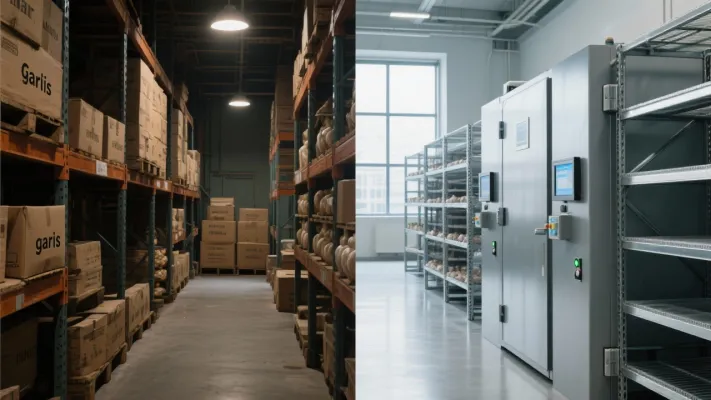
In today’s globalized food trade, the difference between a successful export and a rejected shipment often comes down to one critical factor: temperature control. For high-value crops like garlic, maintaining precise storage conditions isn’t just best practice—it’s a requirement for compliance, quality consistency, and customer trust.
According to the Food and Agriculture Organization (FAO), improper cold chain management results in up to 30% higher post-harvest losses in perishable agricultural goods—especially for commodities such as garlic, ginger, and onions.
Garlic stored at temperatures between -3°C and 0°C shows significantly reduced microbial activity compared to ambient or traditional warehouse environments. Research from the International Journal of Food Microbiology confirms that this narrow range inhibits mold growth by over 70%, while preserving vitamin C levels up to 25% longer than conventional methods.
This isn't just about shelf life—it's about value retention. A study conducted across three major garlic exporters found that shipments kept within this ideal range had:
One exporter from China lost $18,000 in a single shipment when a refrigerated container experienced a 6-hour temperature spike above +2°C due to equipment failure. In contrast, another company using IoT-enabled sensors reported zero quality issues across 12 consecutive shipments to the EU, thanks to real-time alerts and automated adjustments.
These outcomes highlight how modern cold chain solutions go beyond basic cooling—they integrate predictive monitoring, data logging, and remote diagnostics that align with HACCP and GMP standards required by most import markets.
While garlic thrives in sub-zero cold rooms, other high-value crops have similar needs:
A unified approach to cold chain design—based on product-specific science rather than generic assumptions—is now essential for any serious exporter aiming to compete globally.
Download the “Cold Chain Readiness Assessment” PDF—a practical tool used by top-tier exporters to evaluate their logistics against international standards.
Download Now →.png?x-oss-process=image/resize,h_600,m_lfit/format,webp)



.png?x-oss-process=image/resize,h_200,m_lfit/format,webp)





 TikTok
 Facebook