
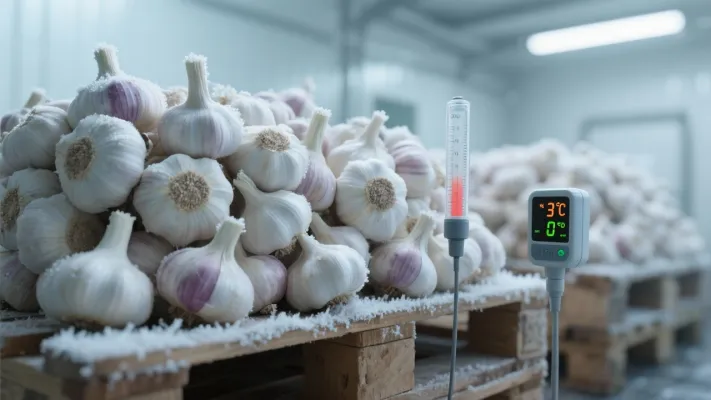
Garlic is an indispensable culinary cornerstone across Middle Eastern kitchens, prized for its pungent aroma and flavor-enhancing qualities. Yet, the region’s harsh climatic conditions—characterized by soaring temperatures and fluctuating humidity—pose a formidable challenge to maintaining garlic freshness from harvest to plate. For restauranteurs and food supply chain managers, understanding and implementing scientifically-backed cold storage techniques can markedly improve garlic shelf life, minimize waste, and preserve its essential quality.
The predominant hot and arid environment, often combined with localized high humidity pockets, accelerates garlic deterioration through enhanced enzymatic activity and microbial growth. Typical ambient temperatures soaring above 35°C (95°F) stimulate rapid respiration rates and sprouting in garlic bulbs, while humidity fluctuations contribute to mold development and textural degradation. This necessitates a controlled atmosphere approach for cold storage that manages not only temperature but also relative humidity and airflow.
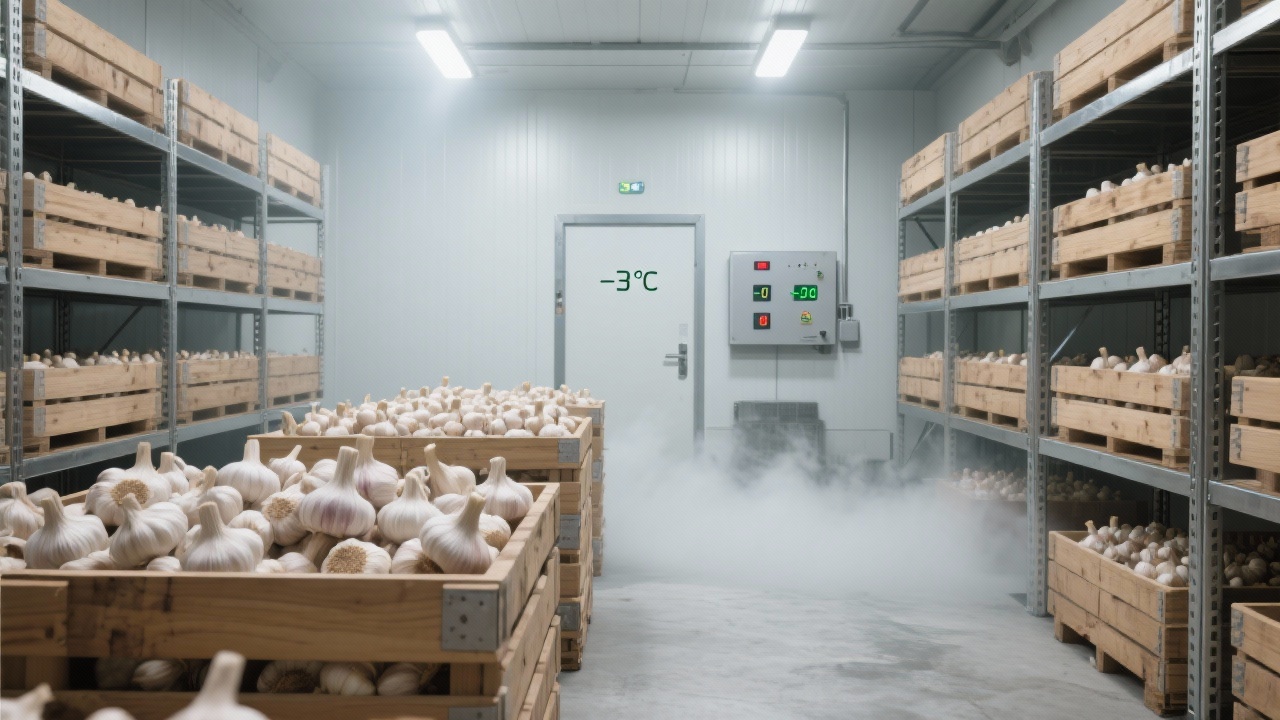
Storing garlic within a precise temperature band of -3°C to 0°C is fundamental to extending its freshness. At these temperatures, the metabolic activities within garlic bulbs drastically slow down. Enzymatic reactions responsible for respiration and sprouting are effectively suppressed; for instance, respiratory quotient values can drop by up to 40-50%, markedly slowing down spoilage mechanisms.
Industry Insight: According to FAO/WHO's Food Cold Chain Guidelines, maintaining a cold storage temperature between -3°C and 0°C is optimal for allium vegetables, underscoring the balance between metabolic suppression and avoidance of freeze damage.
This temperature range also minimizes water loss and maintains tissue integrity, reducing the risk of softening. Garlic within this band remains firm and sprout-free for weeks longer compared to standard refrigeration at 4°C or ambient storage.
Maintaining relative humidity between 85% and 90% is critical to preventing dehydration without inviting mold growth. Excessive dryness causes garlic cloves to shrivel, diminishing culinary quality, whereas excess moisture fosters surface condensation, a primary cause of rot.
Ventilation design complements humidity control by continuously circulating air to prevent moisture accumulation inside storage facilities. Implementing directional airflow systems alongside perforated shelving or racks encourages uniform air distribution, preventing hotspots where condensation might form.
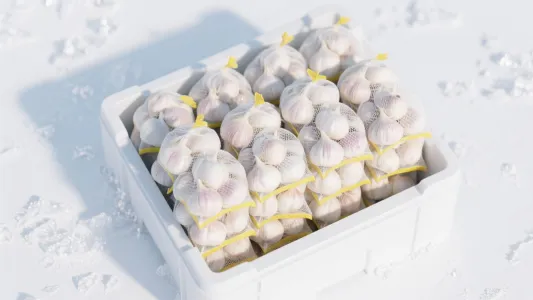
Practical cold storage management also involves the methodical layering of garlic crates. Stacking crates in multiple tiers with adequate spacing enables air currents to flow freely, promoting consistent temperature and humidity profiles throughout the cold storage space. Overcrowding impedes ventilation, while improper stacking can create microclimates conducive to spoilage.
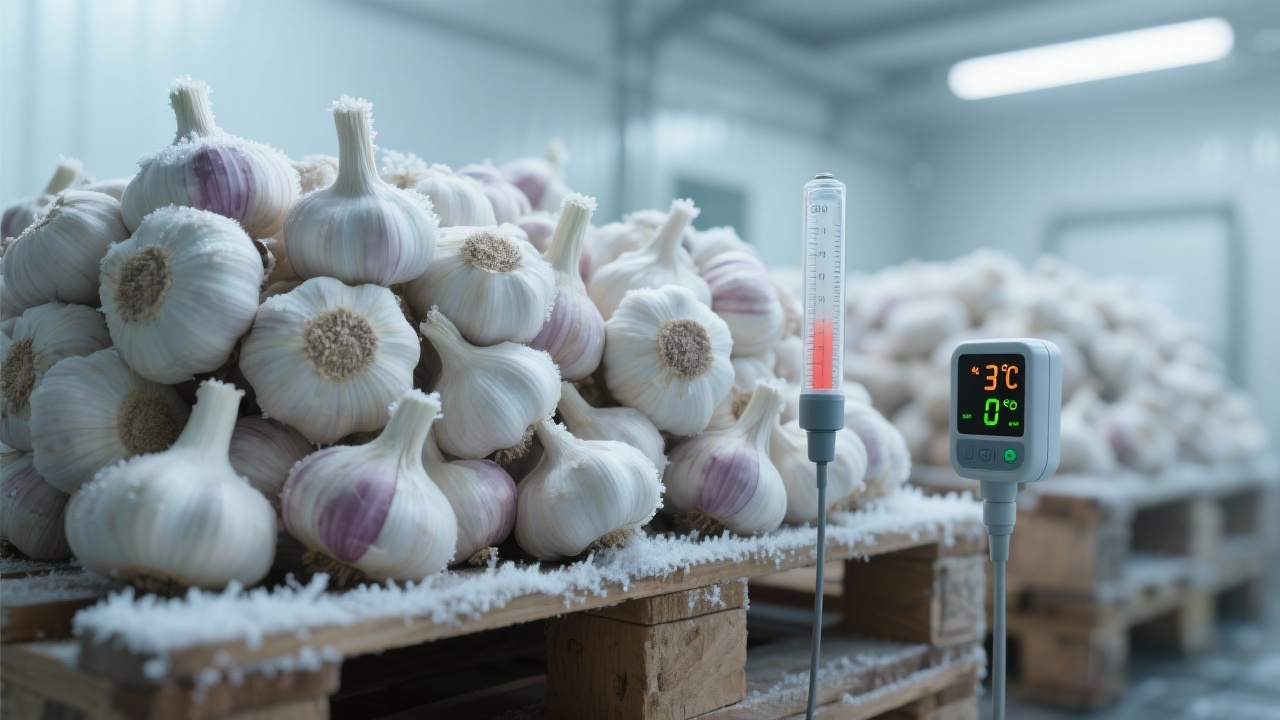
Seasonal temperature swings, particularly the extreme heat during summer months, demand proactive monitoring and adaptive controls. Enhanced real-time temperature and humidity sensors coupled with automated ventilation adjustments can maintain optimal storage conditions continuously. This dynamic approach reduces unexpected spoilage spikes linked to seasonal variability.
Research Note: Agricultural engineering studies reveal that cold storage units equipped with integrated environment controllers can improve garlic retention times by up to 30% during peak summer periods.
Such intelligent cold chain solutions empower Middle Eastern distributors and restaurateurs alike to confidently extend garlic freshness from farm to fork.
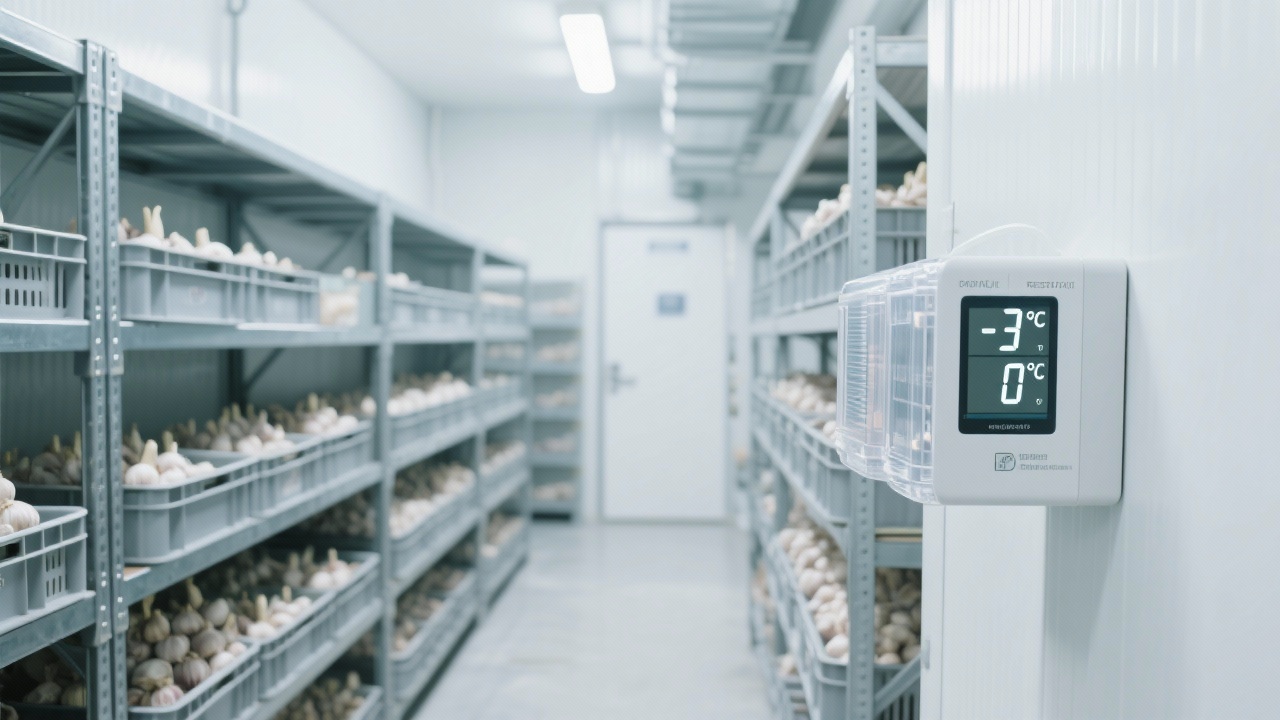
Our company provides end-to-end cold chain solutions designed specifically to address the unique preservation needs of garlic in the Middle Eastern market. From harvest to delivery, every stage incorporates standardized packaging, temperature-monitored transport, and humidity-controlled storage to maintain superior quality.
These protocols ensure that garlic arrives on kitchen shelves at peak freshness, supporting chefs in delivering consistent, high-quality dishes and reducing procurement losses.
Ask yourself:
Answering “no” to any of these could mean compromised garlic quality and increased spoilage risk.
 187
|
187
|
 high-quality garlic sourcing
fresh garlic storage tips
agricultural export quality control
cold chain preservation for garlic
garlic procurement best practices
high-quality garlic sourcing
fresh garlic storage tips
agricultural export quality control
cold chain preservation for garlic
garlic procurement best practices
 481
|
White garlic
Red garlic
Purple garlic
Garlic storage technology
Foreign trade agricultural products
481
|
White garlic
Red garlic
Purple garlic
Garlic storage technology
Foreign trade agricultural products
 95
|
garlic variety selection
international culinary garlic applications
fresh garlic supply solutions
kitchen garlic usage tips
mesh bag garlic packaging benefits
95
|
garlic variety selection
international culinary garlic applications
fresh garlic supply solutions
kitchen garlic usage tips
mesh bag garlic packaging benefits
 144
|
garlic transportation packaging
breathable mesh bag for garlic
cold chain logistics for produce
mold prevention in garlic
agricultural packaging solutions
144
|
garlic transportation packaging
breathable mesh bag for garlic
cold chain logistics for produce
mold prevention in garlic
agricultural packaging solutions
 419
|
organic ginger cultivation
export grade ginger standards
pesticide-free ginger production
organic farming best practices
food safety compliance
419
|
organic ginger cultivation
export grade ginger standards
pesticide-free ginger production
organic farming best practices
food safety compliance


.png?x-oss-process=image/resize,h_600,m_lfit/format,webp)




_(2).jpg?x-oss-process=image/resize,m_fill,h_200,w_200/format,webp)

.png?x-oss-process=image/resize,h_200,m_lfit/format,webp)





 TikTok
 Facebook