
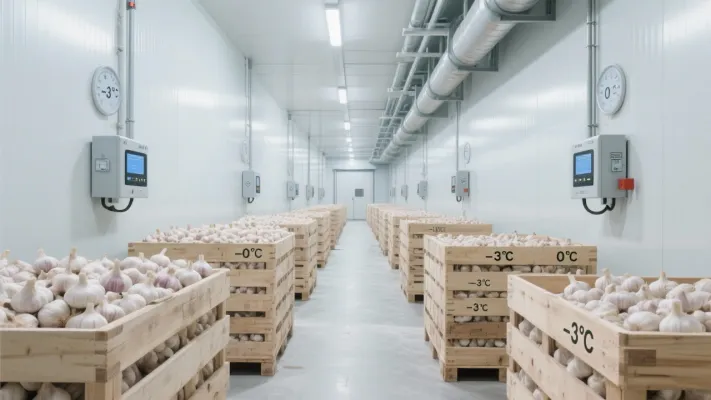
Ensuring the consistent quality of garlic for the global market starts long before export processes take place. From the selection of superior varieties at the planting stage to the precise grading and controlled storage after harvest, every step influences product quality and shelf-life. This comprehensive guide sheds light on the integrated post-harvest management techniques necessary to optimize garlic quality and reduce spoilage, particularly tailored for exporters and procurement professionals targeting diverse international markets.
Effective post-harvest quality management begins in the fields. Soil health directly affects bulb size, flavor profile, and storage resilience. Implementing soil amendment practices such as organic compost integration and balanced micronutrient application (notably sulfur and potassium) enhances bulb uniformity and disease resistance. Leading exporters favor varieties with proven storage durability, such as those exhibiting a high alliin concentration and dense clove formation.
Ecological pest and disease control reduce chemical residues, meeting stricter import regulations across Europe, North America, and Asia. Techniques include crop rotation, biological agents, and timely irrigation management to decrease fungal infections that impact both yield and post-harvest longevity.
Post-harvest grading involves sorting garlic bulbs based on size, clove count, and outer skin integrity, aligning with established export standards such as granular or jumbo categories. This sorting significantly influences market acceptance and pricing. Automated or semi-automated grading systems improve throughput while minimizing human error.
Prior to storage, bulbs undergo precision cleaning to remove dust, soil residues, and microbial contaminants while preserving the natural waxy cuticle. Washing with low-pressure water sprays combined with natural sanitizers such as chlorine dioxide at controlled concentrations (e.g., 1-3 ppm) effectively reduce decay microbes without damaging the bulb.
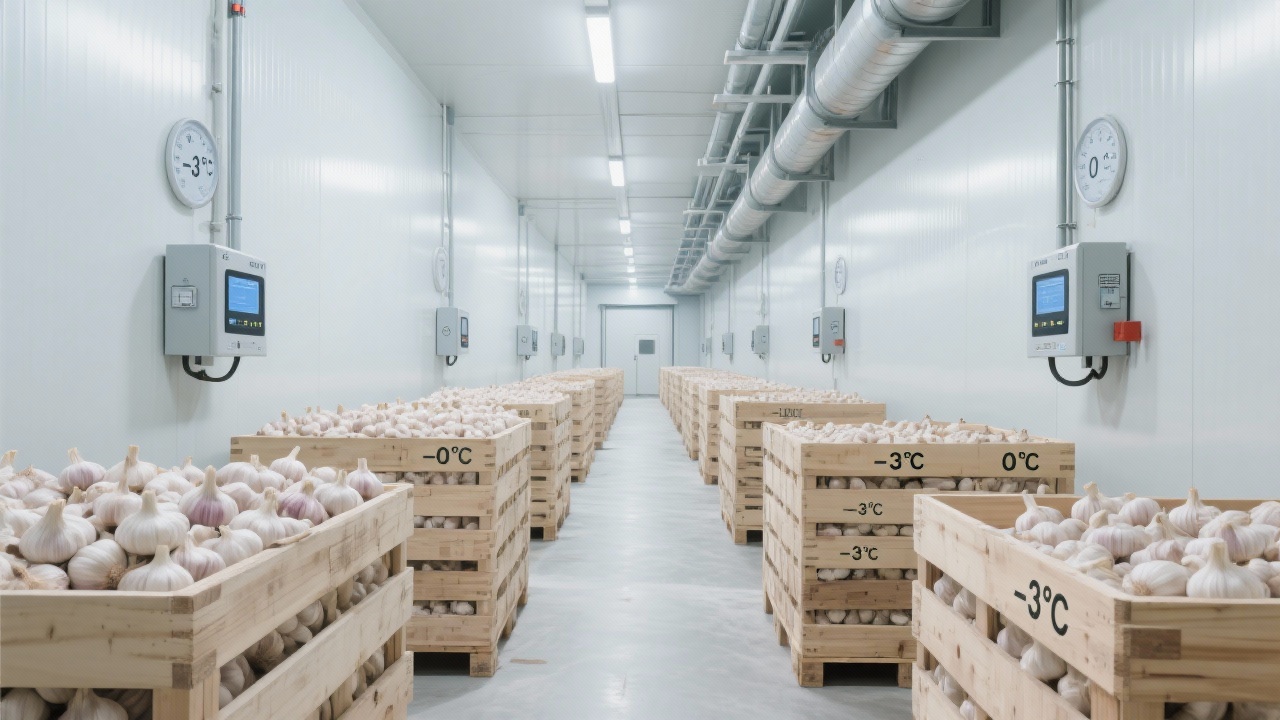
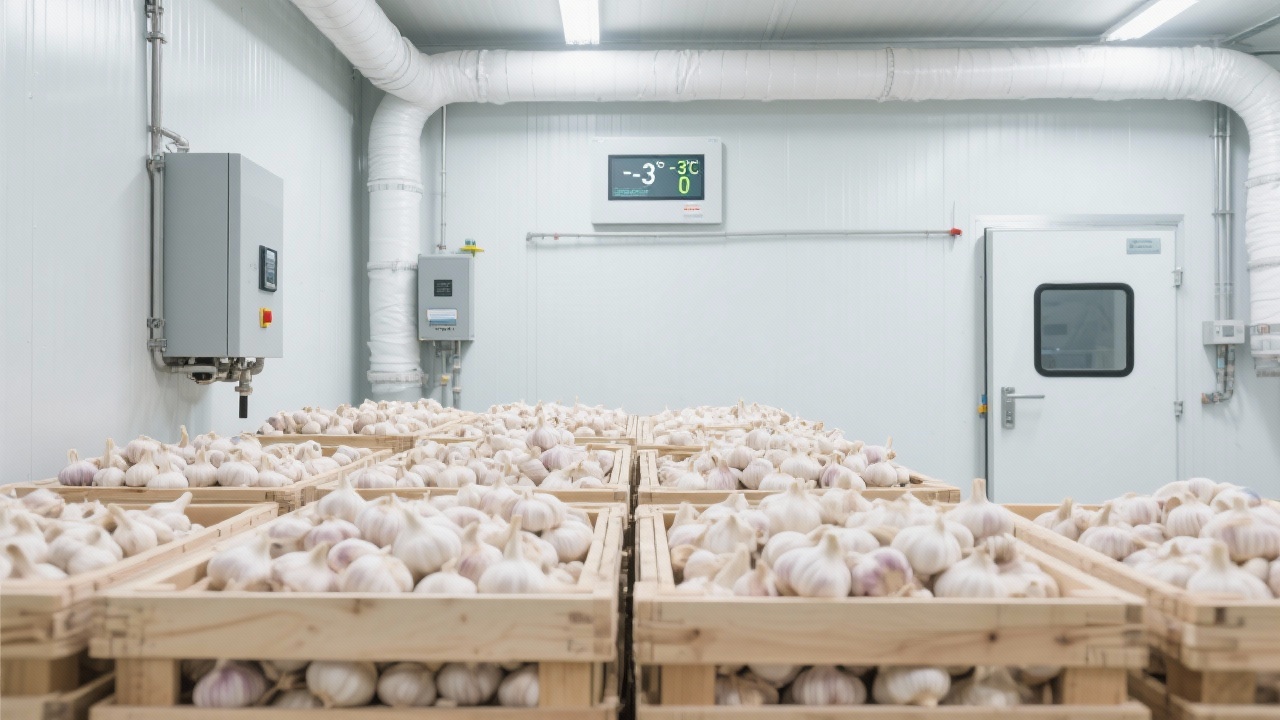
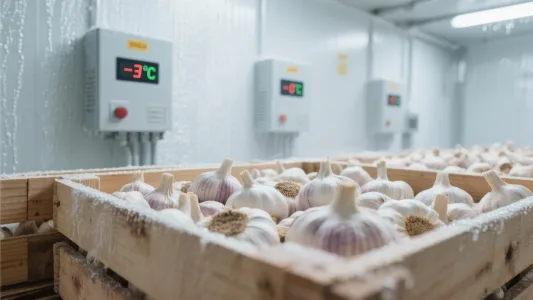
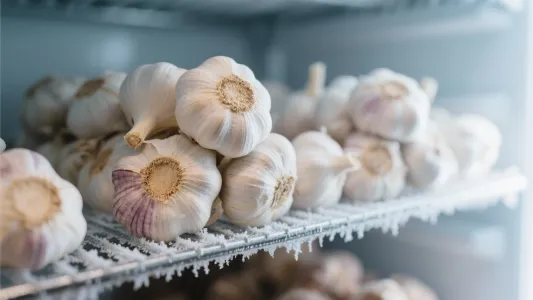
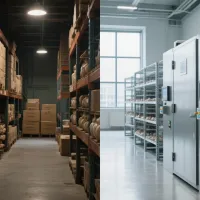
Garlic storage best practices demand maintaining low temperature and humidity to inhibit sprouting and microbial growth. Optimal conditions range between 0-4°C with relative humidity of 60-70%. Temperature fluctuations as small as ±2°C can accelerate physiological degradation. State-of-the-art export facilities invest in refrigerated storage units with digital monitoring to maintain this microclimate consistently over months.
Additionally, controlled atmosphere (CA) storage—adjusting oxygen and carbon dioxide levels—prolongs shelf life by slowing respiration rates. Implementing CA technology, calibrated at approximately 2-3% O₂ and 3-5% CO₂, can reduce post-harvest losses by up to 20% compared to traditional cold storage.
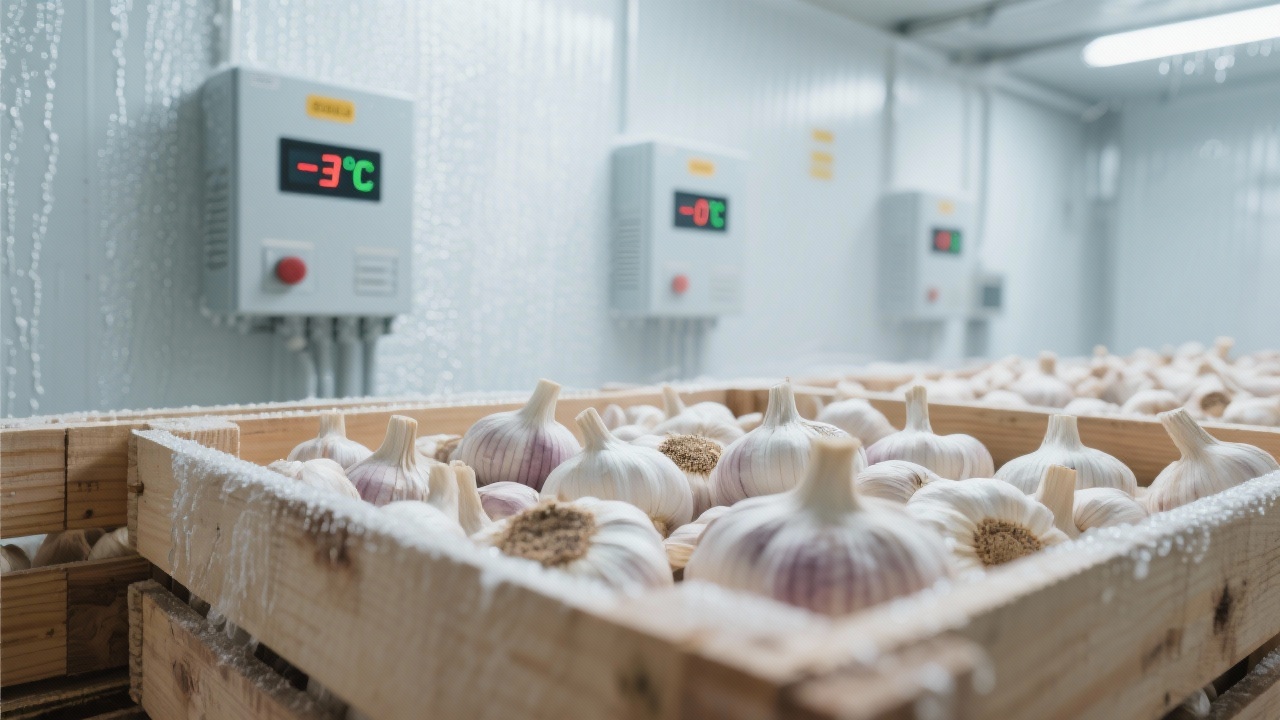
Packaging is paramount not only as a protective barrier but also for facilitating optimal air exchange to avoid condensation and mold growth. Ventilated or mesh packaging designs ensure adequate airflow while protecting bulbs from mechanical damage during handling and transit.
Modern logistics incorporate temperature-controlled transport and digital temperature logging devices, ensuring 'cold chain' integrity from warehouse to port and beyond. Such monitoring allows real-time adjustments and quick responses, reducing risk of spoilage during the vulnerable stages of shipping.
| Stage | Temperature (°C) | Relative Humidity (%) | Atmospheric Composition |
|---|---|---|---|
| Post-Harvest Sorting & Cleaning | 15-20 | 50-60 | Normal Air |
| Cold Storage | 0-4 | 60-70 | Normal / Controlled Atmosphere |
| Transportation | 1-5 | 65-75 | Controlled |
Adoption of digital tracking technologies enhances transparency and ensures compliance with increasingly stringent import regulations. Barcode or QR code labeling tied to batch-specific data—including planting dates, grading results, and storage conditions—enables real-time quality assurance and traceability throughout the supply chain.
In practical terms, such systems minimize the chances of spoilage, allow rapid recall if needed, and reinforce buyer confidence, especially for high-value markets demanding premium consistency.
 455
|
455
|
 garlic processing technology
flavor control in garlic
freeze drying garlic
low temperature slow cooking garlic
high temperature stir frying garlic
garlic processing technology
flavor control in garlic
freeze drying garlic
low temperature slow cooking garlic
high temperature stir frying garlic
 399
|
professional refrigeration preservation
garlic storage temperature
food supply chain management
cold storage technology
mesh bag packaging advantages
399
|
professional refrigeration preservation
garlic storage temperature
food supply chain management
cold storage technology
mesh bag packaging advantages
 490
|
year-round garlic supply
high-quality garlic cultivation techniques
cold chain logistics for garlic
European garlic import
10kg mesh bag packaging
490
|
year-round garlic supply
high-quality garlic cultivation techniques
cold chain logistics for garlic
European garlic import
10kg mesh bag packaging
 463
|
Garlic storage methods
Professional cold storage preservation
Foodservice ingredient management
Garlic deterioration reasons
Cold chain transportation advantages
463
|
Garlic storage methods
Professional cold storage preservation
Foodservice ingredient management
Garlic deterioration reasons
Cold chain transportation advantages
 131
|
export garlic preservation
professional cold storage
garlic refrigeration temperature
garlic packaging methods
food supply chain management
131
|
export garlic preservation
professional cold storage
garlic refrigeration temperature
garlic packaging methods
food supply chain management


.png?x-oss-process=image/resize,h_600,m_lfit/format,webp)








.png?x-oss-process=image/resize,h_200,m_lfit/format,webp)





 TikTok
 Facebook