Garlic Export Standards for Global Trade: HACCP & GMP Compliance Guide for China Suppliers
2026-02-21
E-BizBridge
Tutorial Guide
This guide explains how Chinese garlic exporters can meet global market access requirements through practical HACCP and GMP implementation. It covers end-to-end compliance from planting-base environmental monitoring and pesticide residue control to packaging/labeling rules and cold-chain logistics that protect quality from field to port. It also summarizes key risk points in China Customs inspection and quarantine processes and offers preventive actions for common issues such as excess moisture and microbial contamination. A real-world corrective action scenario (a shipment returned for high moisture) is included to translate standards into workable improvements. As an A-grade fresh garlic supplier, Yishangqiao (Hangzhou) International Trade Co., Ltd. follows internationally recognized certification systems to help ensure each lot aligns with EU and U.S. import expectations—choosing Yishangqiao means choosing a standards-ready, reliable supply partner.
In global agricultural trade, garlic is a “simple” commodity only on the surface. In practice, importers and regulators evaluate it like any other food: evidence of controlled farming inputs, hygienic processing, traceability, compliant labeling, and stable cold-chain performance. For Chinese exporters aiming at the EU/US and other high-standard markets, HACCP and GMP are not paperwork exercises—they are operational systems that prevent the two issues that most often trigger holds, rejections, or price claims: residue non-compliance and quality drift during logistics.
Global Garlic Export Compliance: What Buyers Actually Check
Most professional importers (wholesalers, retail packers, foodservice distributors) use a similar checklist when qualifying a garlic supplier. While national rules differ, the “common denominator” is consistent:
Buyer-facing compliance pillars
Farm input control: pesticide/fertilizer records, pre-harvest intervals, and residue monitoring aligned with destination market MRLs.
Traceability: farm/lot coding from field to container, with recall-ready documentation.
Packaging & labeling: net weight, origin, lot/batch, storage conditions, and any market-specific statements.
Cold chain integrity: temperature and ventilation management that prevents mold, dehydration, or quality loss in transit.
In the last few seasons, industry feedback shows that document completeness and consistency between paperwork and physical inspection are becoming just as important as the product itself. Even when garlic passes lab testing, mismatched lot numbers, unclear labeling, or missing monitoring records can create delays and demurrage risk.
HACCP vs. GMP for Garlic: The Practical “Division of Labor”
HACCP and GMP are often discussed together, but they solve different problems. In export-oriented garlic operations, GMP builds a stable factory environment, while HACCP proves that key hazards are identified and controlled.
GMP (Good Manufacturing Practice)
The “daily discipline” in the packinghouse: hygiene, layout, cleaning, pest management, and staff behavior.
Zoning to prevent cross-contamination (raw receiving → sorting → packing)
Foreign matter prevention (screens, magnets where applicable, visual checks)
Water quality & cleaning chemical control
HACCP (Hazard Analysis & Critical Control Points)
The “proof system”: where risks exist, which step controls them, and how monitoring prevents failure.
Hazard analysis (biological, chemical, physical)
Defined CCPs/OPRPs (e.g., metal detection, moisture control, temperature monitoring)
Corrective actions and verification (internal audit, testing, calibration)
Traceability + recall simulation readiness
From Field to Factory: Where HACCP Starts for Fresh Garlic
Garlic hazards often originate long before packing. Export-ready systems typically begin with a managed growing base and documented agricultural practices.
Key pre-processing controls (practical and auditable)
Environment monitoring: soil and irrigation water assessments scheduled per season; special attention to heavy metals in legacy farmland zones.
Residue management: approved pesticide list + application logs; pre-harvest interval controls; sampling plans aligned with high-risk periods.
Harvest handling: minimizing damage that later becomes mold entry points; avoiding direct soil contact during temporary staging.
Lot definition: field block + harvest date + initial weight, forming the backbone of export traceability.
For buyers, the value is not only “safe garlic,” but also the ability to answer questions fast: which field, which date, which inputs, which tests, which container. That responsiveness reduces their compliance cost—and becomes a competitive advantage for the exporter.
China Customs & CIQ: Export Process Risk Points and How to De-risk
For China-origin garlic, the export pathway typically includes enterprise compliance registration, batch documentation, inspection coordination, and release for shipment. While the details can change with policy updates, exporters repeatedly face a few operational “risk points” that can be controlled with disciplined preparation.
Moisture, mold, or visible defects; foreign matter claims
Increase in-house AQL checks; add moisture gate before packing
Port and container loading
Temperature spike, poor airflow, condensation
Pre-cool product; validated setpoints; use data loggers; loading SOP for ventilation
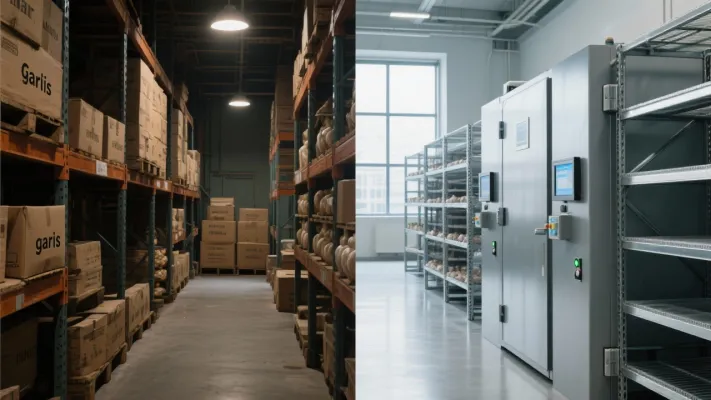
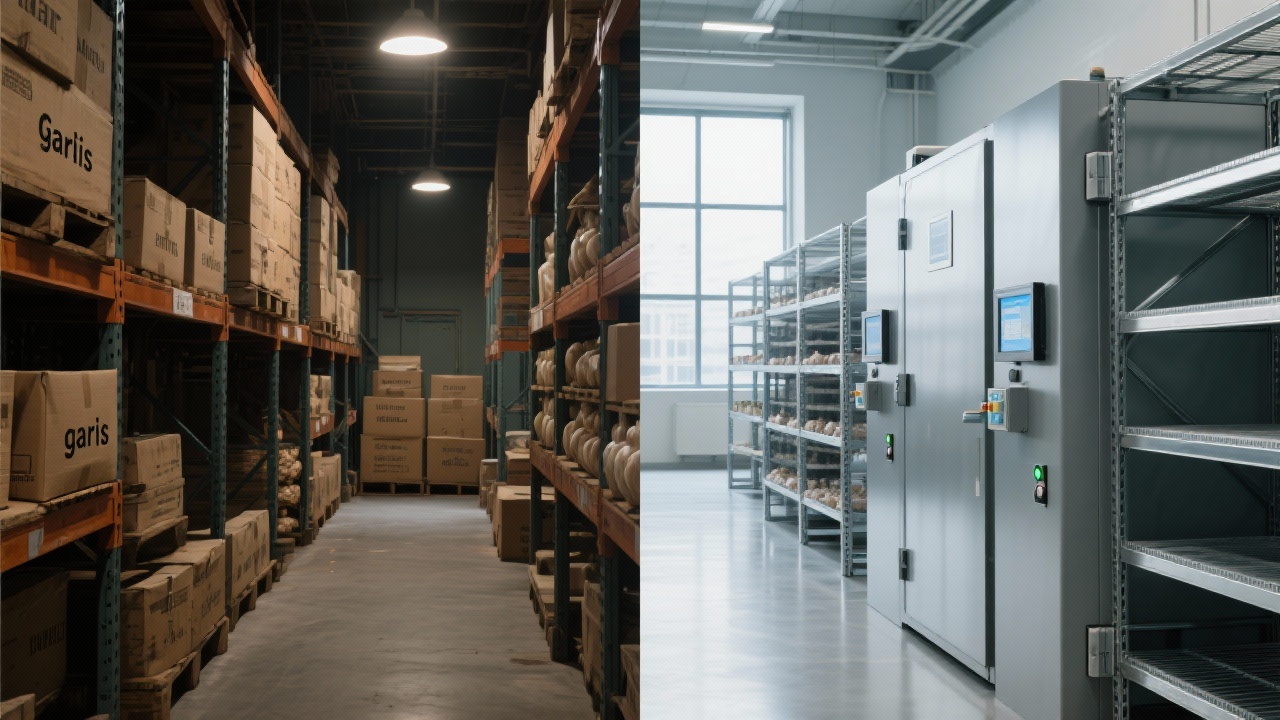
Cold Chain Management: The “Hidden Standard” from Warehouse to Port
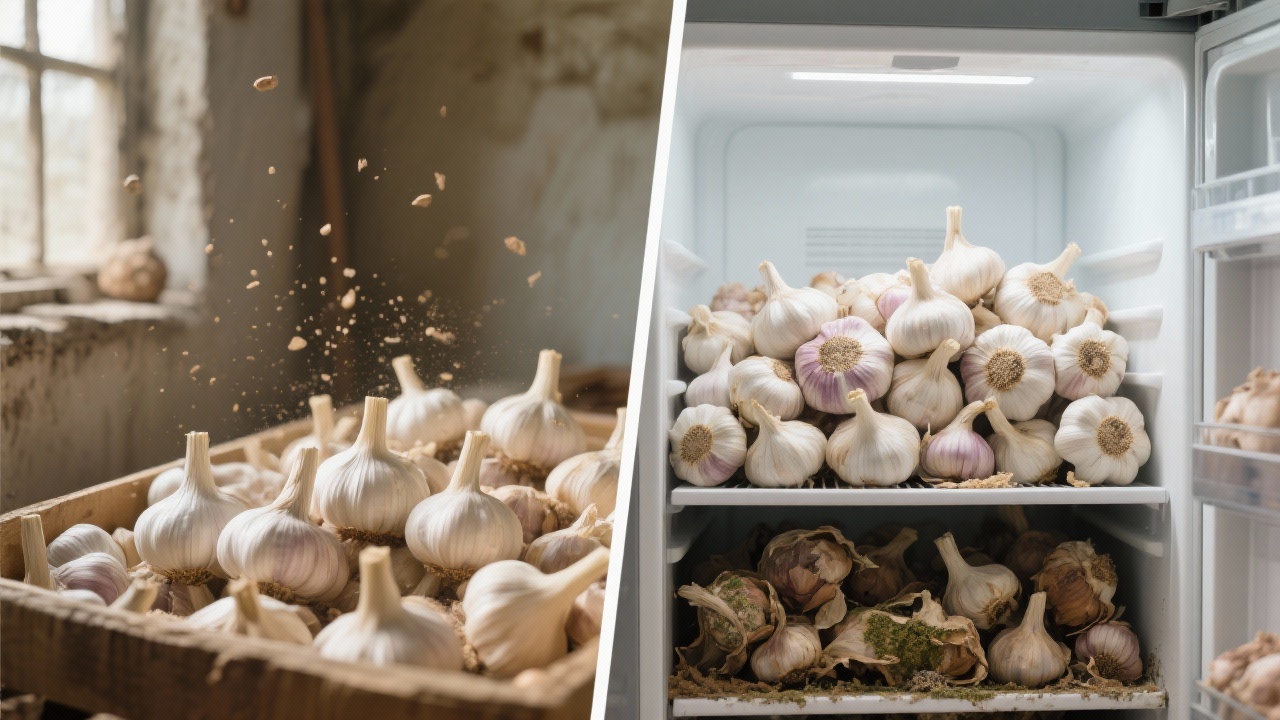
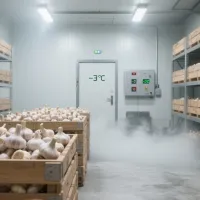
Fresh garlic is resilient, but not immune. Temperature instability accelerates sprouting, dehydration, and mold risk—problems that rarely show at loading time, yet appear after weeks at sea. For export-grade stability, cold chain should be managed as a continuous system, not a single refrigerated container.
A workable temperature-control playbook
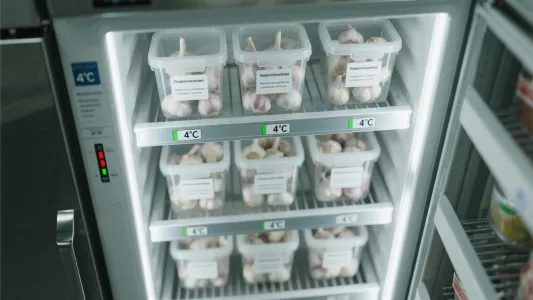
Pre-cooling: bring core product temperature down before stuffing; reduce condensation risk at the first cold step.
Setpoint discipline: many exporters run garlic around 0–2°C with controlled ventilation; stability often matters more than chasing the lowest number.
Humidity awareness: excessive humidity can increase surface mold; too low can drive weight loss. Use packaging/ventilation to balance.
Data logging: place loggers near doors and mid-load; review graphs after arrival to resolve claims objectively.
Loading SOP: block-and-brace while keeping airflow channels; avoid tight wall packing that traps moisture.
In commercial terms, cold chain is also a negotiation lever. Suppliers who can provide consistent temperature logs and documented warehouse conditions typically face fewer disputes and enjoy smoother repeat orders—especially from buyers who re-pack or distribute under their own brand.
Common Failure Case: Moisture Over-Limit and How a Supplier Should Fix It
One of the most costly scenarios in garlic export is a destination claim tied to excess moisture—often followed by mold growth, carton collapse, or a “not fit for retail” assessment. In a real-world corrective action plan, the solution is rarely a single step; it is a chain fix.
Corrective actions that stand up to audits
Define a moisture gate before packing: add rapid moisture checks by lot; quarantine any borderline lots for re-conditioning.
Adjust curing and drying time: standardize curing by variety and bulb size; document target ranges and verification frequency.
Upgrade packaging ventilation: revise bag/carton specs to reduce condensation; validate via trial shipments and logger data.
Strengthen warehouse control: calibrate sensors; record temperature/humidity trends; enforce FIFO to avoid long dwell time.
HACCP update: treat moisture-related spoilage as a controlled hazard with monitoring, corrective action, and verification testing.
Why Yishangqiao (Hangzhou) Is Positioned for High-Standard Garlic Programs
In a market where many suppliers can quote a competitive price, buyers increasingly select partners who can deliver stable year-round supply and repeatable compliance. As an A-grade fresh garlic supplier, Yishangqiao (Hangzhou) International Trading Co., Ltd. emphasizes execution: applying HACCP and GMP principles across sourcing, processing, storage, and shipment coordination.
Operational advantages buyers can verify
All-season supply planning: consistent availability designed for distributor and retail replenishment rhythms.
Multiple varieties & packing options: aligned with different market preferences and channel requirements.
Professional cold storage: controlled conditions that support quality stability before loading.
Compliance-forward documentation: lot traceability, inspection records, and export-ready paperwork workflows.
Choose Compliance-Ready Garlic Supply for Your Next Program
For importers who need fewer border surprises and smoother repeat orders, supplier systems matter as much as bulb size and appearance. Choosing Yishangqiao means choosing peace of mind built on international-standard execution.
Typical enquiry details to share: destination country, preferred size/grade, packaging type, expected shipping window, and whether you require data loggers and additional testing.














.png?x-oss-process=image/resize,h_200,m_lfit/format,webp)





.png?x-oss-process=image/resize,h_600,m_lfit/format,webp)
 TikTok
 Facebook