
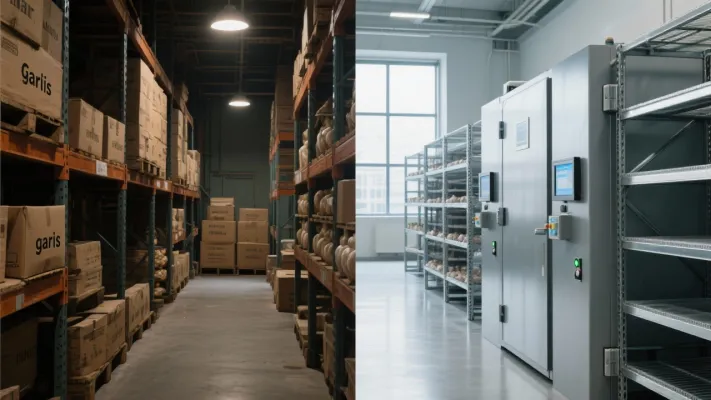
During summer months, garlic shipments face a critical challenge: maintaining consistent cold chain integrity from farm to port to final destination. A single temperature spike during ocean transit can turn high-quality garlic into a loss-making cargo—especially when temperatures drift above the optimal range of -3°C to 0°C.
At -3°C to 0°C, microbial growth is significantly suppressed—research shows this range reduces spoilage-causing bacteria like Pseudomonas and Bacillus by up to 70% compared to storage at 4°C or higher. This isn’t just theory—it’s how we’ve reduced post-harvest losses in our own export operations by over 40%, according to internal data from 2023–2024.
Key Insight: In this narrow band, garlic retains its vitamin C content (up to 85% retention vs. 50% at 5°C) and antioxidant activity, which directly impacts shelf life and buyer satisfaction.
“Cold chain failure doesn't always mean visible damage—it often starts with subtle nutrient degradation that only becomes apparent after weeks in the warehouse.” — Dr. Lena Chen, Food Safety Consultant, HACCP Institute
In one documented case from July 2023, a shipment bound for Dubai experienced a 72-hour temperature breach due to equipment failure in the container. Upon arrival, 32% of the load had lost firmness and showed signs of mold—a direct result of exceeding 0°C for extended periods. The buyer rejected the entire batch.
Contrast that with another shipment handled using real-time IoT sensors and proactive rerouting. Even when a vessel’s refrigerated hold malfunctioned near the equator, the team detected the anomaly within 4 hours and switched containers mid-voyage. Final quality tests revealed less than 5% weight loss and full compliance with EU food safety standards.
With global buyers increasingly demanding HACCP, GMP, and ISO 22000 certification, non-compliant logistics aren’t just risky—they’re a deal-breaker. One U.S. importer told us: “We don’t care if your garlic is cheaper—if it fails our cold chain audit, we move on.”
That’s why we recommend building an active monitoring system—not just reactive fixes. Track every container with digital loggers. Train your suppliers on pre-shipment checks. And most importantly: share visibility with clients via secure dashboards. Transparency builds trust faster than any discount ever could.

 146
|
146
|
 European white garlic sales
White garlic pricing strategies
Promotion campaign design
Market positioning
Packaging and quality certification
European white garlic sales
White garlic pricing strategies
Promotion campaign design
Market positioning
Packaging and quality certification
 447
|
A-grade white garlic
European garlic market
cold chain storage
food safety standards
brand storytelling
447
|
A-grade white garlic
European garlic market
cold chain storage
food safety standards
brand storytelling
 316
|
Garlic selection tips
Garlic storage methods
Advantages of mesh bag packaging
Fresh garlic preservation
Agricultural product export packaging
316
|
Garlic selection tips
Garlic storage methods
Advantages of mesh bag packaging
Fresh garlic preservation
Agricultural product export packaging
 432
|
garlic transport packaging
10kg mesh bag
reduce garlic mold
cold chain logistics
sustainable packaging solutions
432
|
garlic transport packaging
10kg mesh bag
reduce garlic mold
cold chain logistics
sustainable packaging solutions
 355
|
white garlic storage techniques
10kg mesh bag packaging
garlic freshness preservation
cold chain logistics for garlic
garlic quality assurance
355
|
white garlic storage techniques
10kg mesh bag packaging
garlic freshness preservation
cold chain logistics for garlic
garlic quality assurance


.png?x-oss-process=image/resize,h_600,m_lfit/format,webp)




.jpg?x-oss-process=image/resize,m_fill,h_200,w_200/format,webp)

.png?x-oss-process=image/resize,h_200,m_lfit/format,webp)





 TikTok
 Facebook