
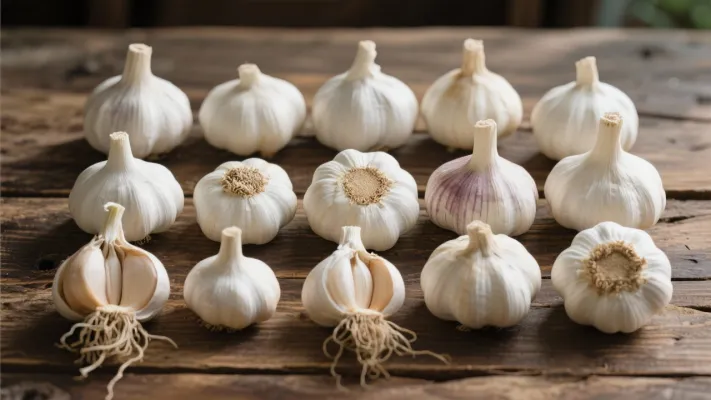
In Europe, where food safety standards and consumer expectations for freshness are among the highest globally, maintaining optimal garlic quality from farm to fork is no longer optional—it’s a competitive necessity. A single temperature deviation during storage can reduce shelf life by up to 40%, leading to waste, lost revenue, and damaged brand trust.
Research published in the Journal of Food Science (2022) confirms that storing fresh garlic at temperatures between -3°C and 0°C significantly slows respiration rates—reducing metabolic activity by over 60% compared to ambient conditions. This not only delays sprouting but also inhibits mold growth such as Penicillium spp., which thrives above 4°C.
“At -3°C, garlic bulbs remain metabolically dormant without freezing damage—ideal for preserving both texture and nutritional integrity.” — Dr. Lena Müller, Agricultural Cold Chain Specialist, Wageningen University
Unlike sealed plastic packaging, breathable mesh net bags allow controlled airflow while minimizing moisture buildup—a critical factor in preventing fungal infection. In a pilot study conducted by a German distributor, garlic stored in net bags retained 92% marketable quality after 12 weeks, versus just 67% in plastic-wrapped batches.
| Packaging Type | Moisture Accumulation Risk | Sprout Rate After 12 Weeks | Marketability (%) |
|---|---|---|---|
| Net Bag | Low | ~8% | 92% |
| Plastic Wrap | High | ~35% | 67% |
Cold storage doesn’t just preserve appearance—it protects bioactive compounds like allicin (a sulfur compound responsible for garlic’s health benefits). Studies show that garlic held at -3°C retains over 85% of its original allicin content after 10 weeks, compared to less than 50% in warmer environments (10°C).
This makes it easier for European buyers—from restaurants to food processors—to confidently source year-round supply without compromising on flavor or health claims.
A Spanish exporter supplying to Italy and France reported a 30% increase in repeat orders after implementing a consistent -3°C cold chain across all warehouses. By partnering with local logistics providers trained in temperature-sensitive cargo handling, they achieved an average shelf life extension of 4–6 months beyond standard storage methods.
For procurement managers looking to secure stable, high-quality garlic throughout the year, this isn't just theory—it's proven practice.
Ready to optimize your garlic storage strategy? Download our free Cold Chain Storage Guide for Fresh Garlic, featuring best practices from EU-certified suppliers, temperature logs, and packaging checklists tailored for B2B exporters.
Get Your Free Cold Storage Manual Now.png?x-oss-process=image/resize,h_600,m_lfit/format,webp)



.png?x-oss-process=image/resize,h_200,m_lfit/format,webp)





 TikTok
 Facebook