
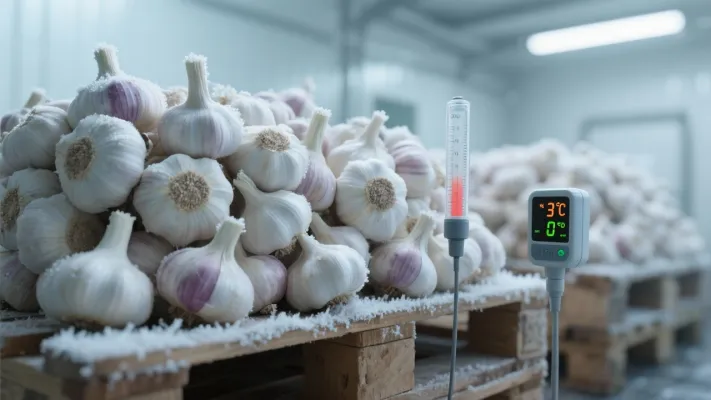
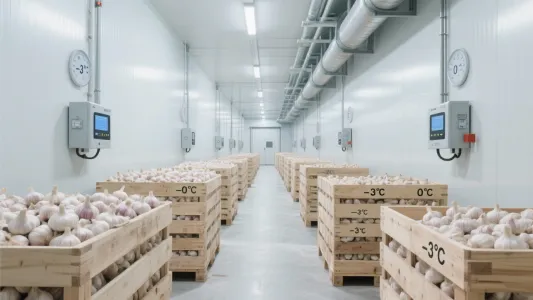
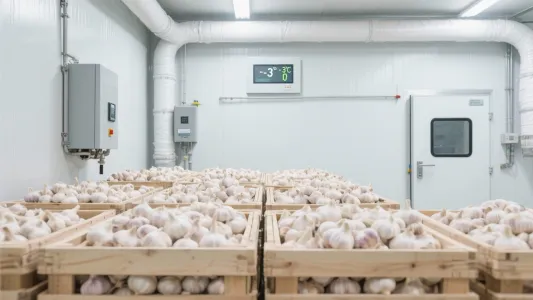
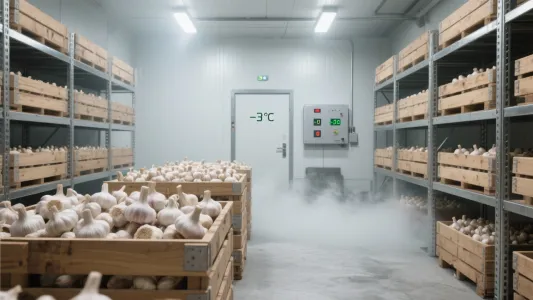
For garlic farmers and distributors, post-harvest losses can account for up to 25% of annual yields, according to the Food and Agriculture Organization (FAO). The key to minimizing these losses lies in mastering the science of temperature-controlled storage. This comprehensive guide explores how maintaining a precise temperature range of -3℃ to 0℃ can extend garlic's shelf life from a typical 3-4 months to an impressive 8-10 months, transforming seasonal harvests into year-round supply.
Fresh garlic undergoes complex physiological changes after harvest that directly impact its quality and shelf life. The bulbs continue to respire, consuming oxygen and releasing carbon dioxide, moisture, and heat. This natural process accelerates at higher temperatures—at 20℃, garlic respiration rate increases by approximately 300% compared to 0℃, leading to rapid sprouting, weight loss, and quality degradation.
Dr. Elena Rodriguez, Post-Harvest Specialist at the International Fresh Produce Association: "Garlic is a living commodity even after harvest. Controlling the storage environment isn't just about preservation—it's about managing a biological process. The -3℃ to 0℃ range represents the optimal balance between inhibiting respiration and avoiding freezing damage."
Properly cured garlic enters a dormant state when stored under ideal conditions, significantly slowing metabolic activity. However, improper temperature management can break this dormancy, triggering sprouting which reduces both market value and consumer appeal.
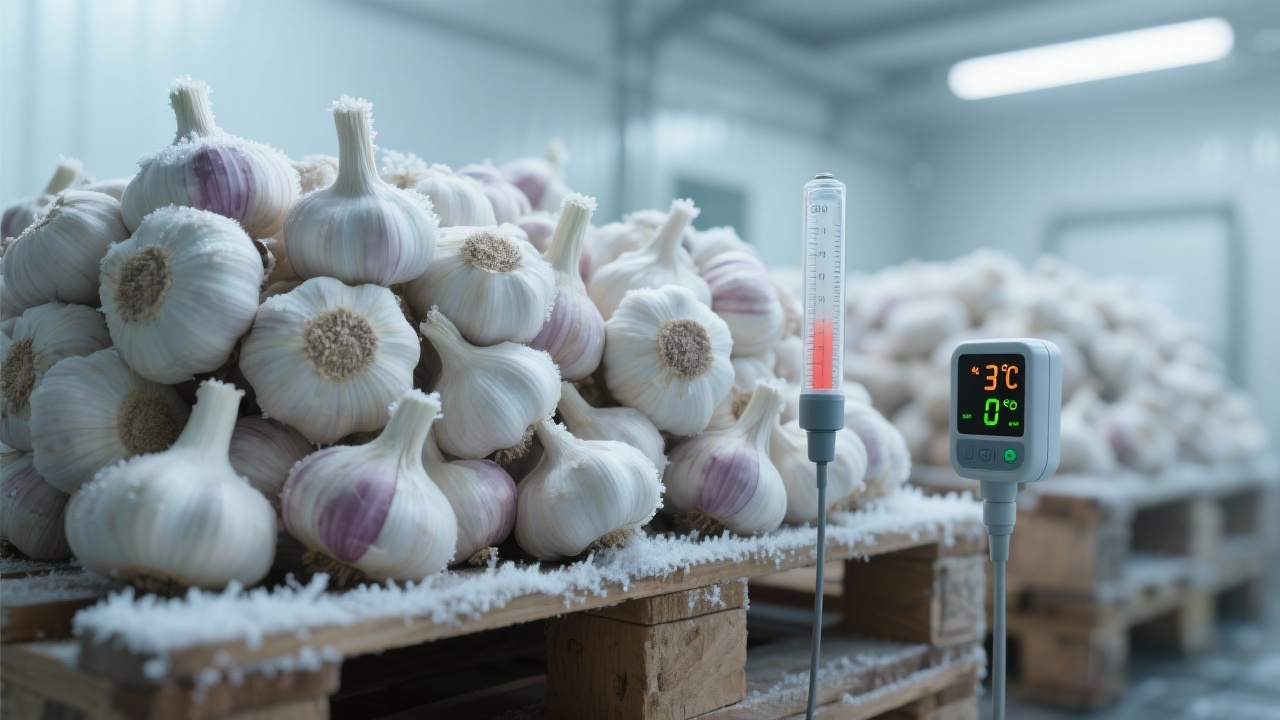
Extensive research conducted by agricultural universities across China, Spain, and the United States confirms that -3℃ to 0℃ represents the "sweet spot" for garlic storage. At temperatures above 0℃, respiration rates remain too high, leading to premature sprouting and moisture loss. Below -3℃, ice crystal formation damages cellular structures, resulting in freeze injury and tissue breakdown.
A 2022 study published in the Journal of Food Science and Technology demonstrated that garlic stored at -1℃ maintained 92% of its original pungency and firmness after 8 months, compared to only 68% when stored at 5℃. The same study recorded weight loss of just 3.2% in the optimal temperature range, versus 12.7% at higher temperatures.
Temperature alone isn't sufficient for successful garlic storage—relative humidity (RH) must also be carefully managed. The ideal RH range for garlic storage is 65-70%. This level minimizes moisture loss without creating conditions that promote mold growth.
Modern storage facilities utilize sophisticated humidity control systems that maintain precise RH levels within ±2%. These systems often incorporate ultrasonic humidifiers and dehumidifiers that respond automatically to environmental changes, ensuring consistent conditions throughout the storage period.
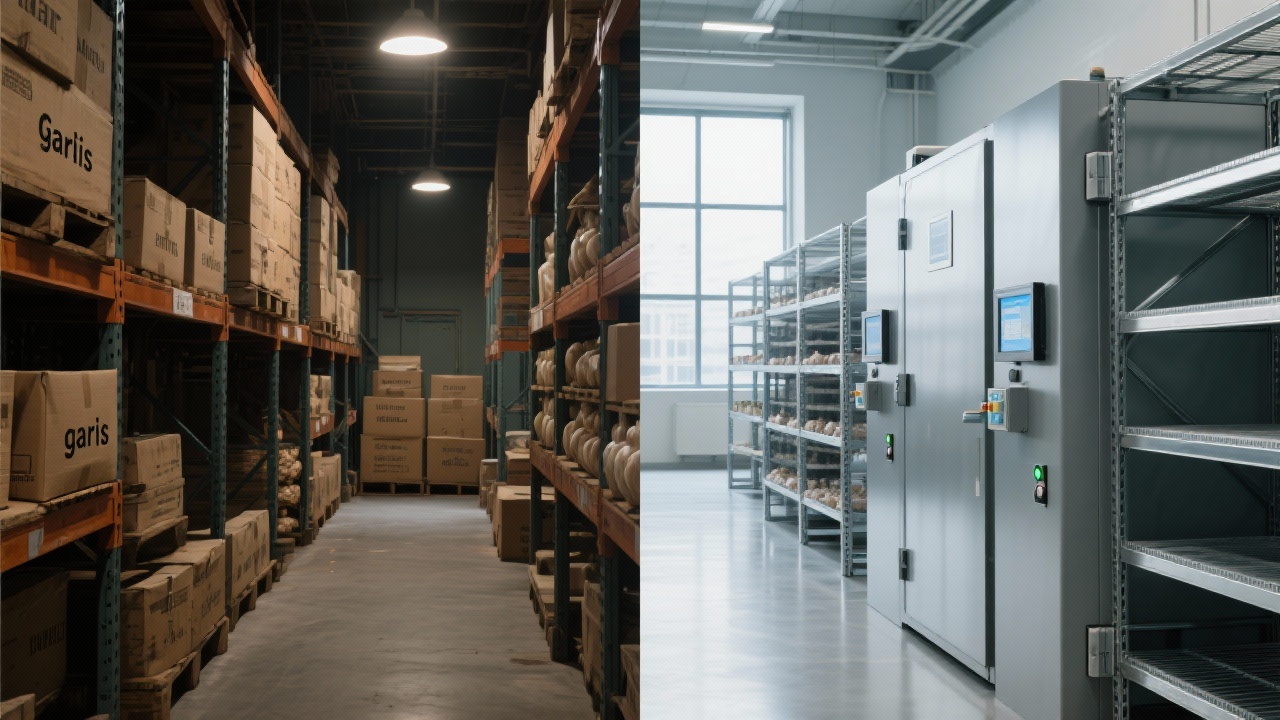
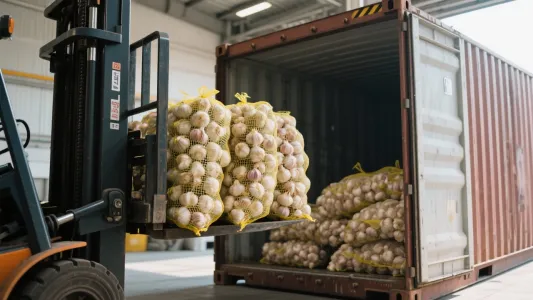
Proper stacking technique is critical for maintaining uniform temperature and humidity throughout the stored garlic. The recommended approach is single-layer horizontal stacking on ventilated pallets, allowing 5-8cm of space between each bulb. This configuration promotes air circulation and prevents heat buildup.
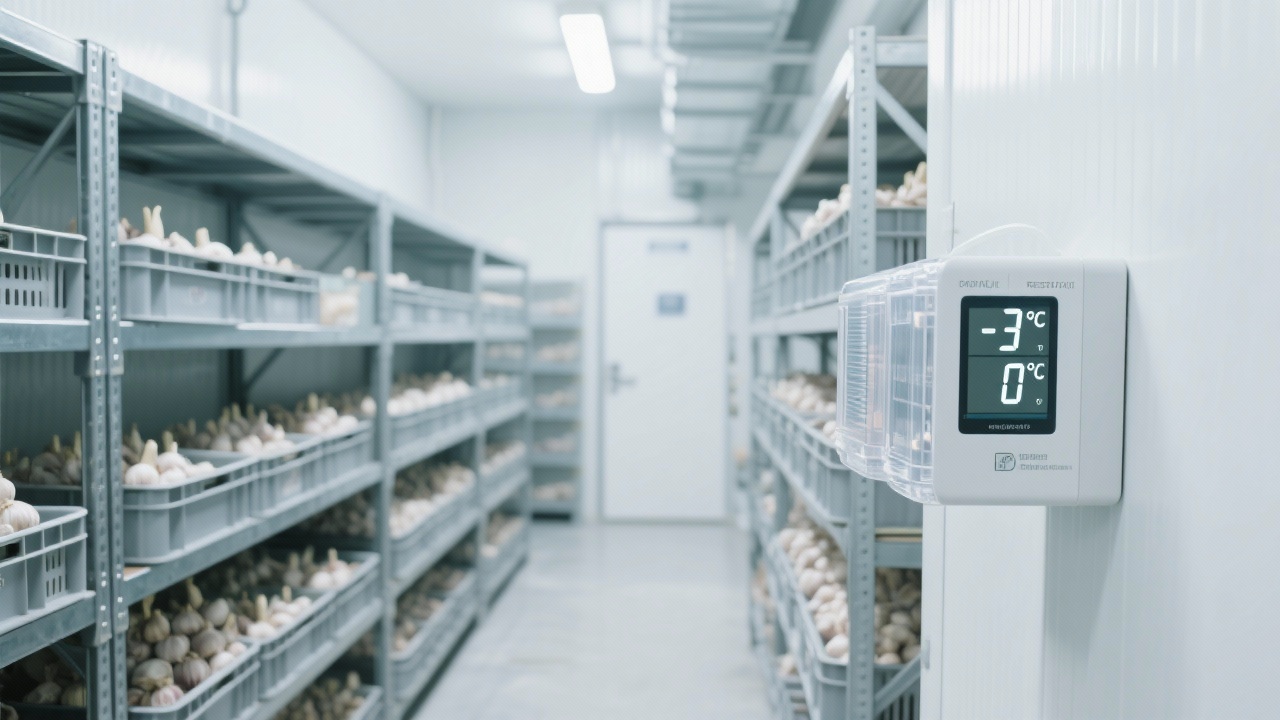
Vertical stacking should be limited to 1.5 meters maximum to avoid pressure damage to lower bulbs. Many successful operations use slotted plastic crates that further enhance airflow while providing structural support. The crate design allows for 360-degree air circulation, ensuring consistent cooling of all bulbs.
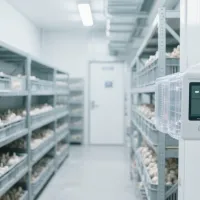
When selecting refrigeration equipment for garlic storage, prioritize systems with precise temperature control capabilities (±0.5℃). For facilities storing more than 50 tons, consider dual-compressor systems with backup capabilities to prevent temperature fluctuations during equipment maintenance.
Investing in a digital monitoring system with remote access provides real-time alerts for temperature or humidity deviations. These systems typically log data every 15-30 minutes, creating a comprehensive record that can be analyzed to optimize storage conditions further.
Shandong Province garlic farmer Mr. Li transformed his business by implementing precision temperature control. "Before optimizing our storage, we could only sell fresh garlic for 3-4 months after harvest," he explains. "Now, with our controlled environment storage system, we've extended that to 9 months, increasing our annual revenue by 40% by capturing off-season market prices."
International garlic distributor Global Fresh Produce reduced their post-harvest losses from 18% to just 4.5% after implementing the -3℃ to 0℃ storage protocol. "The quality difference is remarkable," notes their purchasing manager. "Garlic stored using this method maintains its flavor, texture, and appearance much longer, allowing us to serve premium markets year-round."
Achieving professional-grade garlic storage requires careful planning and investment, but the returns in terms of reduced waste, extended marketability, and improved product quality are substantial. Whether you're a small-scale farmer or a large distributor, the principles of precise temperature control, proper humidity management, and careful handling apply universally.
When evaluating storage solutions, consider not just the initial equipment costs but the long-term operational efficiency. Energy-efficient systems with smart monitoring capabilities may have higher upfront costs but typically deliver significant savings over time through reduced energy consumption and minimized product loss.
亿商桥 specializes in customized agricultural cold chain solutions that ensure your garlic maintains peak quality from harvest to market. Our expertise in temperature-controlled storage has helped numerous producers achieve year-round supply and maximize profitability.
Discover Your Optimal Storage SolutionRemember that successful garlic storage is an ongoing process of monitoring, adjustment, and refinement. Regularly review your temperature and humidity logs, conduct quality checks, and stay informed about advancements in storage technology. By making the commitment to proper post-harvest management, you'll position your business for long-term success in the competitive global garlic market.
 335
|
335
|
 fresh garlic quality assessment
garlic storage techniques
premium garlic identification
cold storage for garlic
garlic supply chain management
fresh garlic quality assessment
garlic storage techniques
premium garlic identification
cold storage for garlic
garlic supply chain management
 462
|
red garlic benefits
red garlic immune system
red garlic anti-inflammatory
red garlic vs white garlic
red garlic nutrition
462
|
red garlic benefits
red garlic immune system
red garlic anti-inflammatory
red garlic vs white garlic
red garlic nutrition
 245
|
garlic preservation techniques
foodservice ingredient storage
cold storage temperature control
ventilation packaging benefits
garlic storage mistakes
245
|
garlic preservation techniques
foodservice ingredient storage
cold storage temperature control
ventilation packaging benefits
garlic storage mistakes
 126
|
garlic storage techniques
garlic freshness preservation
optimal garlic temperature
restaurant food storage
garlic shelf life extension
126
|
garlic storage techniques
garlic freshness preservation
optimal garlic temperature
restaurant food storage
garlic shelf life extension
 63
|
Chinese garlic export to EU
HACCP for garlic processing
GMP compliance for fresh produce
EU pesticide residue limits garlic
garlic traceability and cold chain
63
|
Chinese garlic export to EU
HACCP for garlic processing
GMP compliance for fresh produce
EU pesticide residue limits garlic
garlic traceability and cold chain

.png?x-oss-process=image/resize,h_600,m_lfit/format,webp)





.png?x-oss-process=image/resize,h_200,m_lfit/format,webp)





 TikTok
 Facebook