

EU Garlic Import Compliance · HACCP · GMP · Residue Control · Cold Chain
For EU buyers, garlic is no longer “just a commodity.” It is a food-safety governed fresh product that must survive audits, border checks, and shelf-life expectations. Below is a practical interpretation of how HACCP and GMP are typically implemented across planting, harvesting, processing, packaging, and refrigerated logistics—so procurement teams and distributors can reduce risk and keep supply stable.
In the EU, food safety management is fundamentally built on HACCP principles (hazard analysis and critical control points) supported by GMP/Prerequisite Programs (PRPs). For garlic, that means buyers look for a system that can prove three things: risk identification, process control, and traceability—not only a certificate on paper.
Identifies food hazards (chemical, biological, physical) and sets CCPs, critical limits, monitoring, corrective actions, verification, and recordkeeping.
Covers hygiene zoning, sanitation, pest control, water quality, equipment maintenance, staff training, and supplier management—making HACCP workable day-to-day.

The EU’s compliance logic is simple: prevent problems early, document control, and prove consistency. In practice, garlic exporters typically build HACCP plans around these high-sensitivity points:
| Stage | Main risks | What “good control” looks like | Typical records |
|---|---|---|---|
| Planting & inputs | Pesticide residue, heavy metals | Approved agrochemicals, pre-harvest interval (PHI) control, supplier qualification | Input logs, PHI checklist, soil/irrigation test reports |
| Harvesting | Physical contamination, mold growth | Clean harvest tools, rapid drying/curing, segregation of damaged bulbs | Harvest hygiene checks, defect sorting logs |
| Processing & grading | Cross-contamination, foreign matter | Hygiene zoning, metal detection/sieving where applicable, cleaning verification | Sanitation SOPs, equipment checks, calibration records |
| Packaging & labeling | Label non-compliance, traceability gaps | Lot coding, origin info, pack date, net weight accuracy, material compliance | Label approval, weight checks, batch traceability sheets |
| Cold chain & shipment | Quality loss, condensation/mold | Stable temperature, ventilation, humidity control, pre-cooling, clean containers | Temperature logs, container inspection, loading photos |
For many EU importers, the deciding factor is whether an exporter can provide consistent batch-level evidence (not just annual audits). A practical benchmark in the industry is maintaining ≥ 95% complete traceability records per shipment lot—especially when buyers need fast responses to retailer questions.
Expert note (buyer-side reality): EU buyers rarely complain about “taste.” They complain about what could trigger a border delay—residue exceedance, mold risk, or unclear traceability. Once a shipment is delayed, downstream promotions and shelf schedules can collapse within 48 hours.
The EU enforces Maximum Residue Levels (MRLs) for pesticides. While MRLs vary by active substance, a common operational approach is to run multi-residue screening on representative lots with a detection scope of 200–500 compounds, and target an internal safety margin (for example, ≤ 70–80% of the legal limit) to reduce risk from sampling variance.
Garlic quality can deteriorate quietly: excess moisture increases the chance of condensation in cartons and subsequent mold. Many exporters manage this by controlling curing and storage conditions and setting internal acceptance ranges for moisture/appearance. In practice, buyers often prefer suppliers who can show stable storage conditions and documented inspection frequencies (e.g., daily checks in peak season).
Garlic is not typically high-risk like ready-to-eat foods, but EU buyers still expect strong GMP controls: personnel hygiene, sanitation verification, and pest prevention. The most effective plants treat “dirty-to-clean” flow as non-negotiable—separating incoming raw material areas from graded/packed areas, and enforcing tool color-coding and controlled entry.
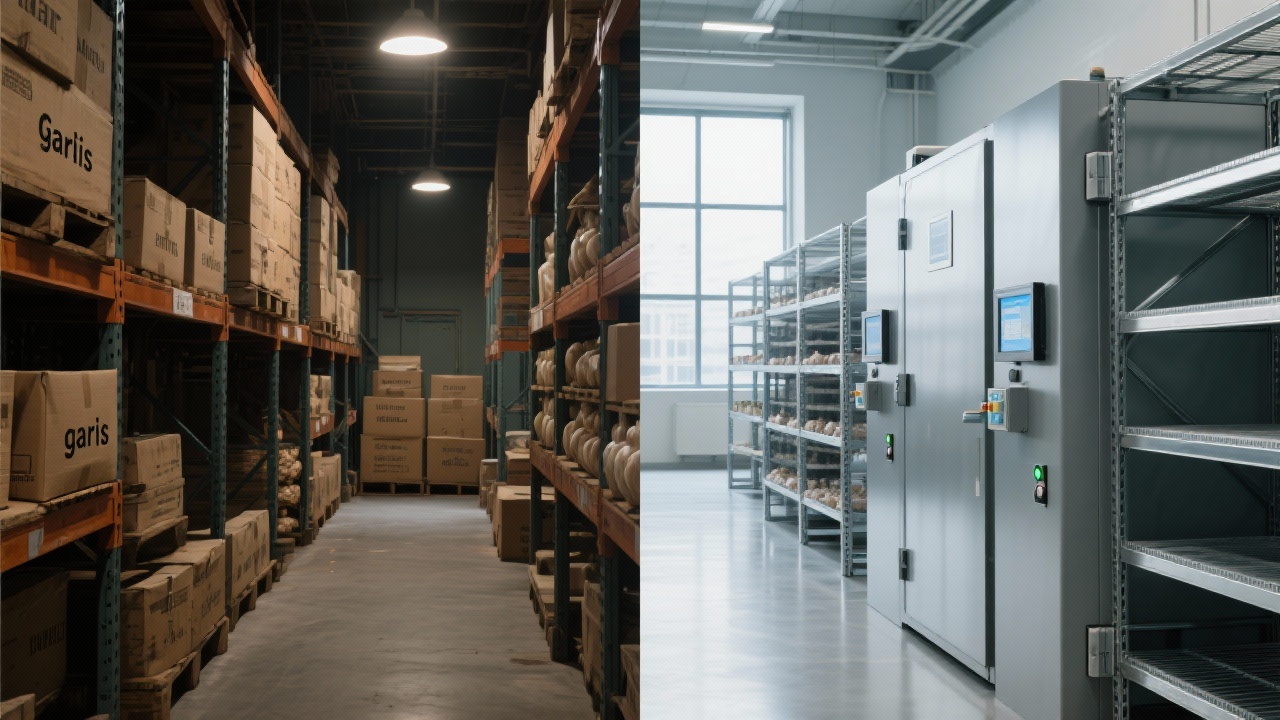
When buyers audit a garlic supplier, they often want to see that HACCP is not “copied from templates.” A practical implementation usually follows this sequence:
1) Map the process
Planting → Harvest → Curing → Sorting → Packing → Storage → Loading
2) Hazard analysis
Residues, mold, foreign matter, label risk, temperature abuse
3) Define CCPs/KCPs
Supplier inputs, sorting, packing checks, shipment temperature control
4) Limits & monitoring
Inspection frequency, sampling, calibration, storage temperature logging
5) Corrective actions
Hold/rework/re-grade, root cause analysis, retraining
6) Verification
Internal audits, lab tests, mock recalls, trend reviews
7) Documentation
Batch files, COAs, traceability records, shipping temperature reports
Policy excerpt (operational principle): EU food hygiene rules require food businesses to implement and maintain permanent procedures based on HACCP principles, supported by good hygiene practices. In buyer audits, this is often translated into one question: “Can you prove control over every batch you ship?”
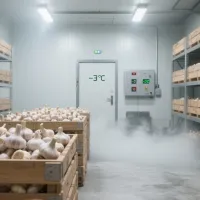
Refrigeration is not only about temperature; it is about stability. Temperature swings can trigger condensation and accelerate quality loss. Many professional exporters use a narrow storage band and disciplined loading practices to protect appearance and shelf performance.
A notable reference in the industry is maintaining refrigerated storage at -3°C to 0°C with systematic monitoring and clean-room style handling rules for packed goods. This reduces respiration rate and helps preserve firmness and color through long-distance shipping—especially when combined with disciplined container pre-checks.
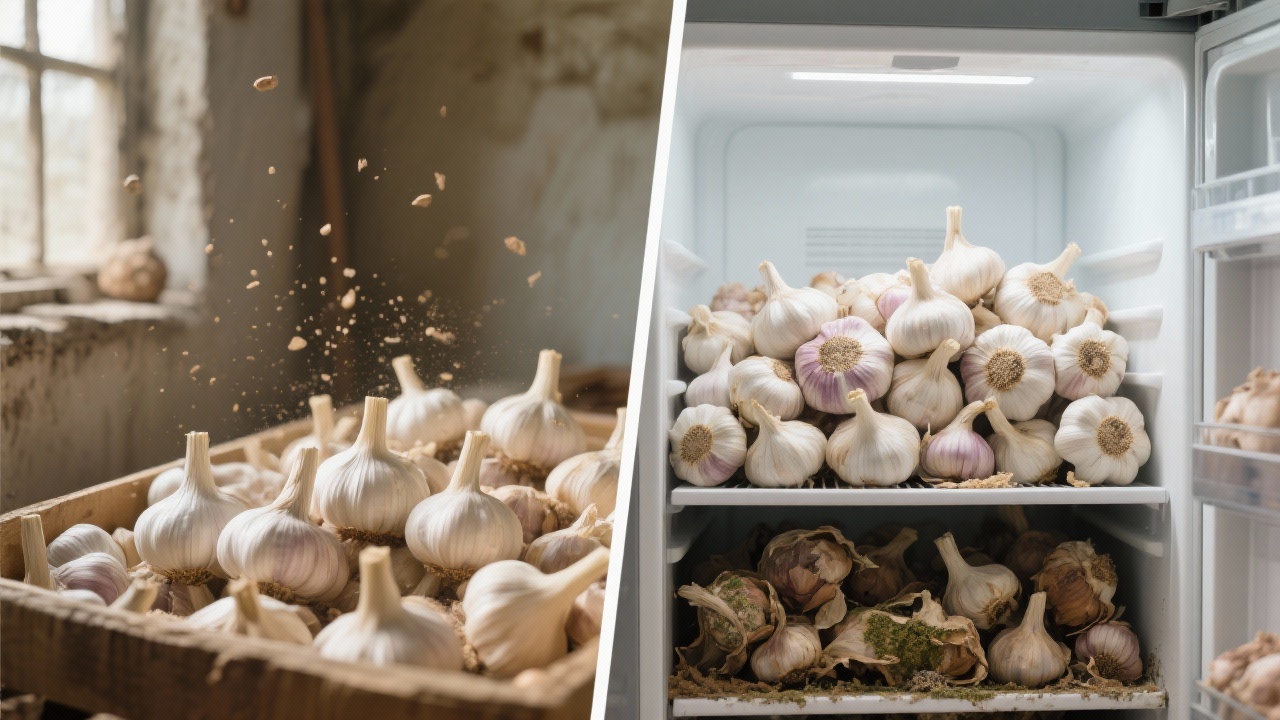
In real export operations, consistency is the advantage buyers feel most. Companies that operationalize HACCP and GMP from farm management through packing and cold chain tend to deliver smoother seasons: fewer label corrections, fewer claims about mold/condensation, and faster document response during customs checks.
Drawing from Yishangqiao (Hangzhou) International Trading Co., Ltd. field experience, the strongest outcomes usually come from standardized batch management (lot coding + inspection checkpoints) and disciplined cold storage practices. The brand message is intentionally simple and buyer-friendly: “Choosing Yishangqiao’s garlic means choosing quality and freshness, starting a healthy new journey of life.”
Even experienced EU importers see recurring issues across the market. If you are comparing suppliers, these are worth asking about early—before the first container is booked:
Often caused by rushed curing, inconsistent storage, or container temperature swings. Prevention typically relies on curing discipline and stable cold chain.
A good supplier can quickly provide input logs and test strategy. Slow responses often signal weak upstream control.
Fixable—but only if the exporter has standardized lot coding and a reliable release process before loading.
Interactive question: In your EU garlic sourcing, which issue causes the most cost—residue compliance, moisture/mold claims, or traceability and labeling? Share your biggest pain point in the comments so peers can compare solutions.
If you need stable lots, clear traceability files, and disciplined cold chain practices, explore how a professional exporter organizes HACCP + GMP from farm to shipment.
Get EU-ready garlic with HACCP & GMP-controlled cold chain — choose Yishangqiao garlicResponse-ready for buyers: lot coding, test strategy alignment, and shipment documentation support.
Keywords: Chinese garlic export to EU, HACCP certification, GMP certification, agricultural product export standards, cold chain logistics management

 338
|
338
|
 export garlic to europe
european garlic supply chain
garlic storage techniques
garlic variety selection
garlic quality management
export garlic to europe
european garlic supply chain
garlic storage techniques
garlic variety selection
garlic quality management
 200
|
premium garlic supply
international restaurant garlic procurement
garlic varieties for cooking
garlic packaging for chefs
professional garlic storage tips
200
|
premium garlic supply
international restaurant garlic procurement
garlic varieties for cooking
garlic packaging for chefs
professional garlic storage tips
 146
|
Grade A white garlic standards
Garlic sourcing guide
European garlic market
High - quality garlic inspection techniques
Garlic quality assessment
146
|
Grade A white garlic standards
Garlic sourcing guide
European garlic market
High - quality garlic inspection techniques
Garlic quality assessment
 429
|
organic ginger applications
ginger baking techniques
health benefits of ginger
ginger essential oil production
ginger pickling methods
429
|
organic ginger applications
ginger baking techniques
health benefits of ginger
ginger essential oil production
ginger pickling methods
 358
|
Garlic storage temperature
European garlic export
Garlic packaging technology
High - quality garlic varieties
Cold - chain preservation techniques
358
|
Garlic storage temperature
European garlic export
Garlic packaging technology
High - quality garlic varieties
Cold - chain preservation techniques


.png?x-oss-process=image/resize,h_600,m_lfit/format,webp)








.png?x-oss-process=image/resize,h_200,m_lfit/format,webp)





 TikTok
 Facebook