
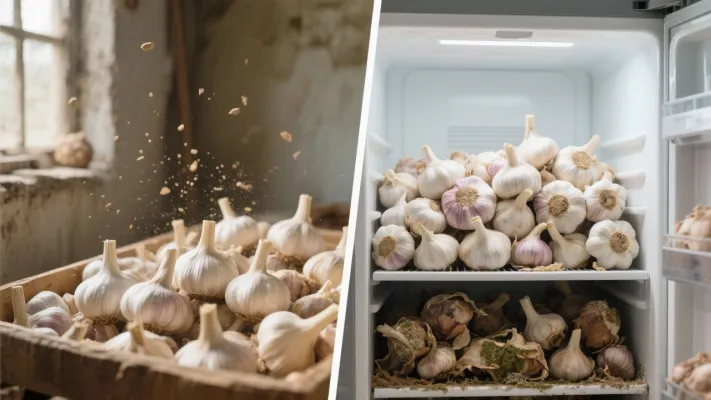
For garlic growers and supply-chain buyers, “quality” is rarely a single factor. It is a combination of bulb size uniformity, dry matter, skin integrity, residue compliance, and—most importantly—how stable the lot remains from harvest to cold storage and shipment. Drip irrigation is increasingly used as a practical lever to make these variables predictable.
In many garlic regions, flood irrigation or overhead sprinklers are still common. They can deliver water fast, but they also introduce variability that shows up later—during grading, storage, and export inspection. The most frequent issues are not dramatic in the field; they appear as inconsistent bulb sizing, soft bulbs after curing, or uneven maturity that complicates harvest timing.
From a buyer’s perspective, these field-level inconsistencies create downstream costs: sorting labor increases, storage losses rise, and shipment claims become more likely. Drip irrigation is not a “nice-to-have”—it is a controllable input that improves the probability of consistent lots.
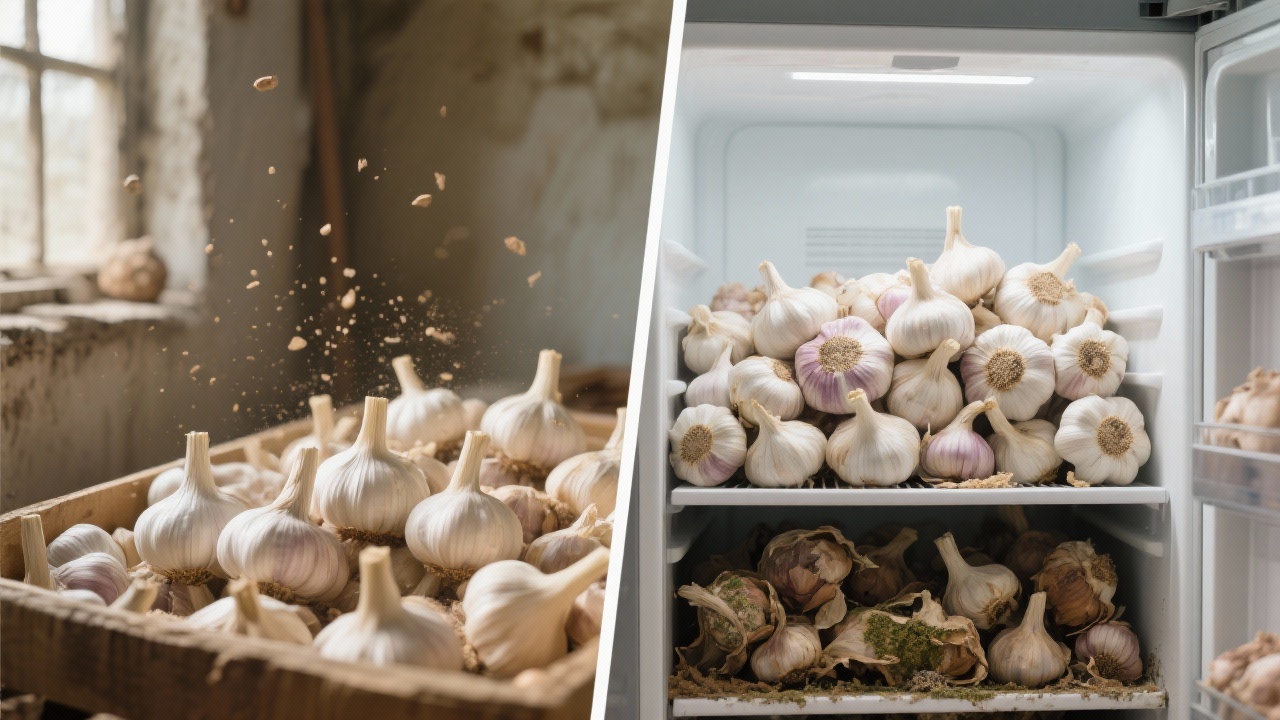
A drip system delivers water through laterals and emitters directly to the root zone at a controlled rate. In garlic, this matters because the crop is sensitive to both drought stress and waterlogging—especially during bulb initiation and bulbing. With drip, the goal is not “more water,” but stable soil moisture within an optimal band.
1) Seedling / early vegetative stage: steady moisture supports root establishment and reduces stand variability.
2) Bulb initiation (often triggered by temperature and day length): moisture stability helps synchronize development, improving grade consistency.
3) Bulb expansion (bulking period): precise scheduling reduces stress swings that lead to uneven sizing and thin outer skins.
Many farms combine drip with fertigation (injecting soluble nutrients into the irrigation line). For garlic, this can improve nutrient efficiency and reduce the “flush and leach” cycle common in heavy irrigation. In practical terms: less nitrate leaching, more predictable plant vigor, and a tighter size distribution at harvest.
Across major garlic-growing regions, field trials and commercial adoption show a consistent pattern: drip improves water productivity and tends to raise marketable yield by stabilizing growth. The exact number depends on soil type, climate, and management, but the direction is reliable.
| Metric (per hectare) | Conventional (flood/sprinkler) | Drip irrigation | Typical impact |
|---|---|---|---|
| Seasonal irrigation water | 4,500–6,500 m³ | 2,800–4,200 m³ | ~25–45% less water |
| Water use efficiency | 0.9–1.6 kg garlic / m³ | 1.6–2.4 kg garlic / m³ | ~30–70% higher |
| Marketable yield | 10–16 tons | 12–20 tons | ~10–25% increase |
| Premium-grade pack-out rate | 55–70% | 70–85% | More uniform sizing |
| Post-harvest loss (storage + handling) | 6–12% | 3–7% | Less rot/sprout variability |
Reference ranges reflect common commercial outcomes reported across semi-arid and temperate garlic regions; actual results depend on emitter spacing, scheduling, soil texture, and fertility program.
The farms that get consistent export-grade garlic from drip typically follow a simple, repeatable workflow. The technology matters, but the discipline matters more: monitoring, small adjustments, and documenting the field decisions that ultimately define a batch.
Step 1: Map zones by soil texture & slope
Prevents under/over-watering pockets that later cause mixed maturity.
Step 2: Set emitter spacing & flow rate
Matches root zone wetting pattern to garlic row spacing.
Step 3: Schedule irrigations by ET + soil check
Shorter, more frequent cycles reduce stress swings.
Step 4: Fertigation in small doses
Improves nutrient uptake and reduces leaching loss.
Step 5: Taper water pre-harvest
Supports curing, skin quality, and storage stability.
Expert note (field agronomist perspective): “With garlic, the biggest commercial win from drip is not only yield—it’s the reduction in within-field variability. When moisture is stable, grading becomes predictable, curing is cleaner, and storage outcomes are easier to manage batch by batch.”

In Yishangqiao’s commercial garlic planting base, drip irrigation was introduced to address a recurring bottleneck: lots that looked strong at harvest but showed inconsistent sizing and higher-than-expected storage loss during peak shipping windows. The project prioritized three outcomes buyers care about most—uniformity, curing stability, and batch consistency.
Grower feedback (translated): “The difference is that the field behaves more like one field. Harvest timing is easier, and the bulbs cure more evenly. When the packing team opens the batch, it looks like the same product.”
For buyers who rely on controlled-atmosphere storage (CA storage) or long-distance sea freight, this consistency matters. Even a small reduction in sprouting or soft bulb incidence can protect contract performance, reduce claims, and support stable year-round supply.
Drip irrigation works best when paired with complementary practices that protect plant health and document production. Garlic buyers increasingly evaluate farms not just on product appearance, but on process reliability—how risks are managed and recorded.
NDVI/thermal checks can identify weak zones early. Combined with drip zoning, farms can correct issues without overwatering the entire field—reducing disease pressure and saving input costs.
Lower leaf wetness and better canopy balance often reduce fungicide frequency. IPM improves compliance confidence for food processors and retail-oriented supply chains.
In decision-stage sourcing, what stands out is a supplier’s ability to prove consistency. That’s why drip irrigation is frequently integrated into a broader “from field to shipment” framework—where irrigation logs, fertilization records, and storage management align with batch-level documentation.

For food processors, importers, and supply chain managers, drip irrigation is meaningful only if it translates into measurable controls. The following questions help qualify whether drip is being used as a true quality system rather than a simple hardware upgrade.
When these controls are present, drip irrigation becomes part of a supplier’s operational credibility—supporting stable quality, safer long-haul storage, and smoother audit conversations.
If your procurement decisions depend on predictable sizing, stable storage performance, and auditable field-to-shipment records, request documentation for the Origin Direct Supply Standard and the Batch Traceability System. These frameworks connect planting blocks, irrigation/fertigation logs, curing, CA storage, and shipment lots—so quality is not just promised, but provable.
Explore the Origin Direct Supply Standard & Batch Traceability System
 217
|
217
|
 fresh garlic quality judgment
garlic storage methods
cold - storage preservation of garlic
agricultural product procurement guide
high - quality garlic selection skills
fresh garlic quality judgment
garlic storage methods
cold - storage preservation of garlic
agricultural product procurement guide
high - quality garlic selection skills
 200
|
premium garlic supply
international restaurant garlic procurement
garlic varieties for cooking
garlic packaging for chefs
professional garlic storage tips
200
|
premium garlic supply
international restaurant garlic procurement
garlic varieties for cooking
garlic packaging for chefs
professional garlic storage tips
 156
|
fresh garlic
garlic storage techniques
mesh bag packaging
garlic variety selection
international agricultural products supply
156
|
fresh garlic
garlic storage techniques
mesh bag packaging
garlic variety selection
international agricultural products supply
 112
|
garlic storage
cold storage temperature
food freshness in refrigeration
garlic spoilage prevention
cold chain management
112
|
garlic storage
cold storage temperature
food freshness in refrigeration
garlic spoilage prevention
cold chain management
 343
|
garlic cross-border transport loss
10kg mesh bag packaging
agricultural cold chain packaging
food logistics optimization
garlic storage technology
343
|
garlic cross-border transport loss
10kg mesh bag packaging
agricultural cold chain packaging
food logistics optimization
garlic storage technology
_(2).jpg?x-oss-process=image/resize,m_fill,h_200,w_200/format,webp)



.png?x-oss-process=image/resize,h_600,m_lfit/format,webp)





.png?x-oss-process=image/resize,h_200,m_lfit/format,webp)





 TikTok
 Facebook