


Typical buyer KPIs
- Low variance in moisture and bulb firmness during transit
- Traceability by lot (field → packhouse → container)
- Document readiness for border checks and customer audits
- Stable defect rate (mold/decay) across seasons
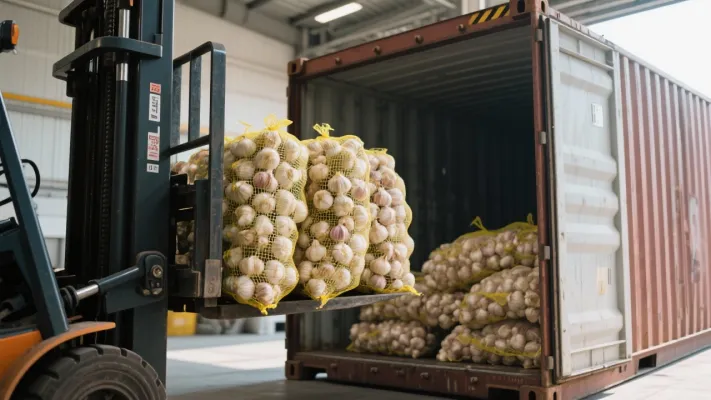
In global agricultural trade, garlic is a “simple” product that becomes complex the moment it crosses borders. Importers in the EU, US, and other regulated markets increasingly expect a verifiable system: pesticide residue control, moisture stability, microbiological safety, and cold-chain integrity—documented in a way customs and buyers can audit.
This article explains how Chinese garlic exporters align with international requirements, and how HACCP and GMP practices translate into day-to-day operations—from planting to port—so buyers can reduce rejection risk and keep supply stable.
Garlic shipments are commonly challenged on three fronts: chemical residues (MRLs), microbial limits (particularly for peeled/processed formats), and quality parameters like moisture, sprouting, mold, and decay. In practice, a compliant product is not only “safe”—it is predictable. Predictability is what procurement teams pay for when they scale.
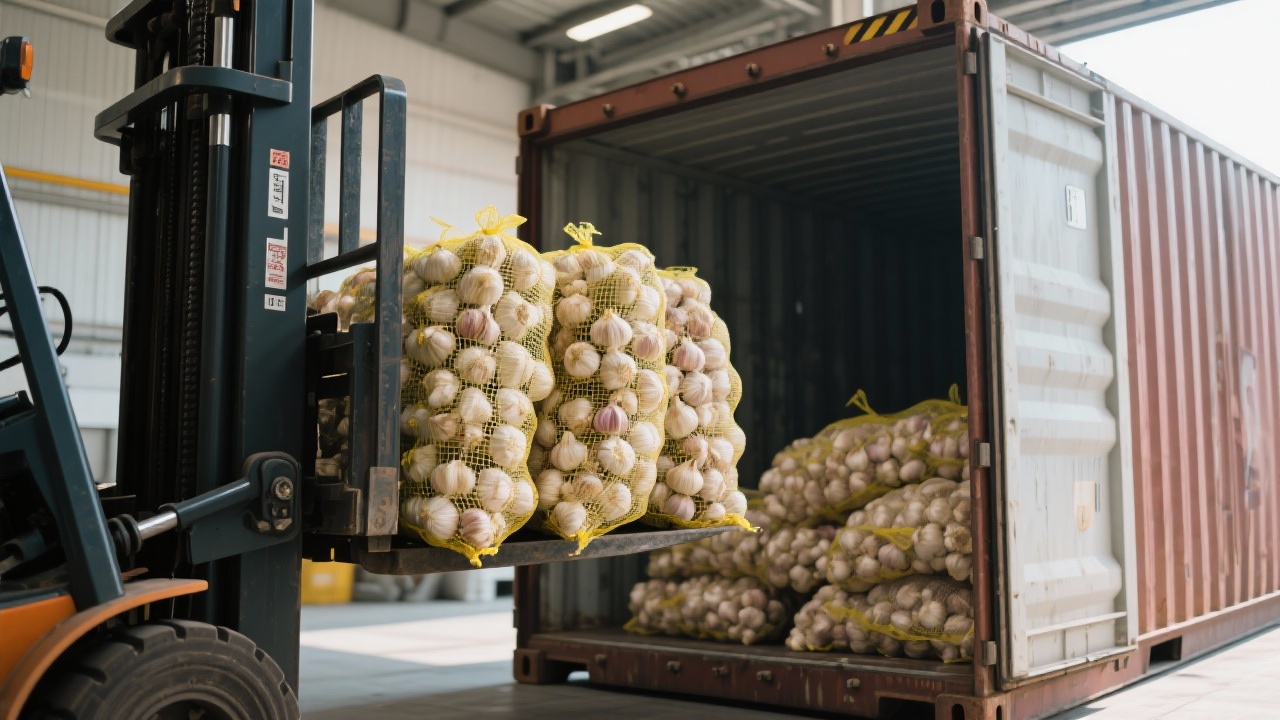
For agricultural commodities, GMP stabilizes daily hygiene and process discipline; HACCP identifies and controls food safety hazards at critical points. Buyers typically do not want “a certificate on the wall”—they want evidence the system is working.
| Element | GMP (Operational Baseline) | HACCP (Hazard Control) |
|---|---|---|
| What it answers | “Is the facility consistently clean and controlled?” | “Where can hazards occur, and how are they prevented?” |
| Evidence buyers ask for | Cleaning logs, pest control, training records, water management | CCP monitoring, corrective actions, verification testing, traceability drills |
| Common garlic focus | Foreign matter control, sanitation, packaging integrity | Residue risk management, microbiological risk, moisture & storage controls |
Policy & audit reality check: Many importers now require a document chain that connects field records, lab results (residue/micro), and container loading data. When a question arises at customs, the speed and completeness of your documentation often determines whether the shipment keeps moving.
The most reliable exporters treat garlic like a controlled project, not a seasonal gamble. Below is a practical process map importers can use to evaluate suppliers and reduce non-conformance risk.
1) Farming plan
Approved inputs list, spray schedule, field traceability codes.
2) Harvest & curing
Controlled drying, sorting, defect removal to reduce mold risk.
3) Packhouse GMP
Sanitation, foreign matter control, grading, lot labeling.
4) HACCP checkpoints
Monitoring, corrective actions, verification testing (residue/micro).
5) Cold storage
Temperature & humidity control to limit sprouting/decay.
6) Container loading
Pre-cool, airflow design, data logger placement, seal control.
7) Customs & release
Export inspection docs, COA, phytosanitary as applicable.
In regulated lanes, buyers commonly expect lot-level traceability within 4–8 hours after a query, and many prefer suppliers that can support pre-shipment testing plus a clear corrective-action workflow if any parameter trends upward.
Residue compliance is a systems issue: approved agrochemicals, application intervals, and field records. Importers often request a COA from ISO/IEC 17025-aligned labs and a residue plan that matches target-market MRL expectations. As a reference, many buyers aim for conservative internal limits, e.g., ≥20–30% below the legal MRL to buffer sampling variability and multi-residue screening.
Moisture is one of the most common “silent” failure points because it interacts with temperature, ventilation, and time. In commercial practice, exporters often target a stable post-curing moisture condition to reduce mold and decay in humid routes. Many supply chains use in-process checks during curing, plus humidity control in storage, because even a small shift can trigger quality deterioration over a 20–35 day sea transit.
Interactive question: Have you ever faced a deduction or cancellation because garlic arrived soft, moldy, or “wet” after unloading—despite looking acceptable at origin?
Whole bulbs typically carry lower microbiological scrutiny than peeled garlic, but buyers still evaluate hygiene indicators. For peeled garlic, importers commonly ask for environmental sanitation verification, water quality management, and a HACCP plan showing how cross-contamination is prevented. As a practical benchmark, many buyers request routine testing such as total plate count, yeast & mold, and key pathogens depending on product type and destination requirements.
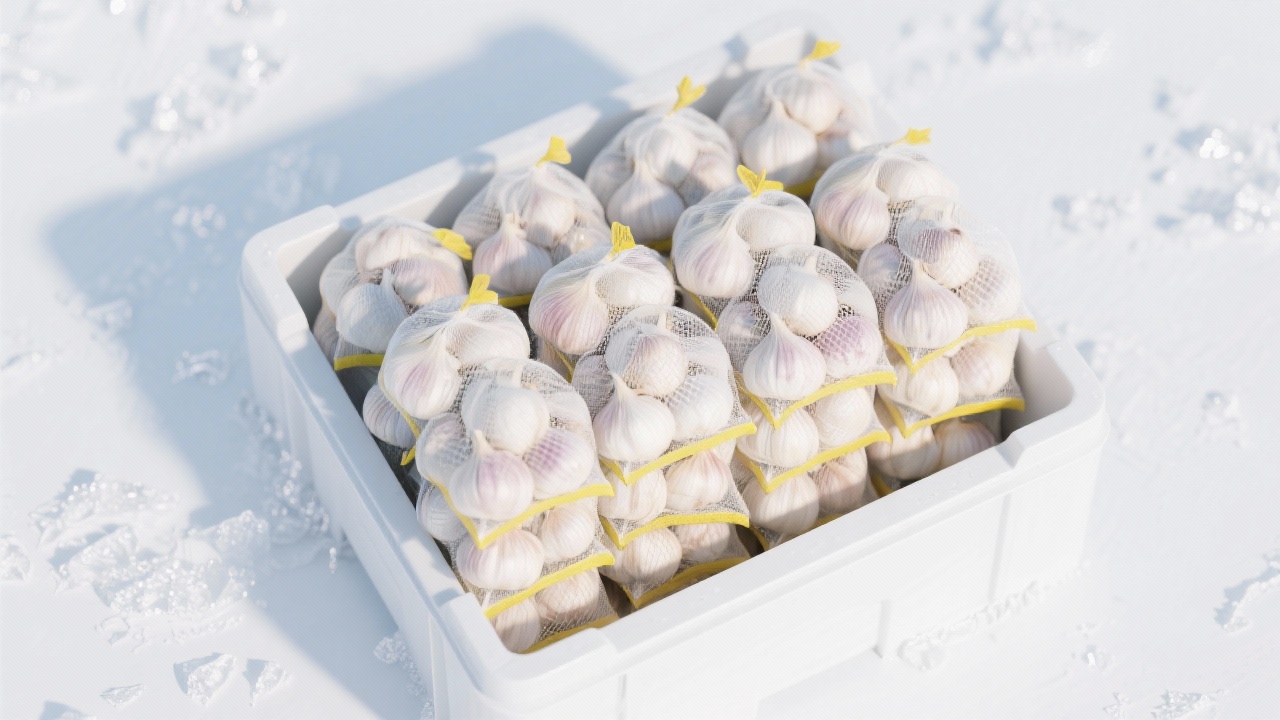
For garlic, cold chain is not only about “keeping it cold.” It is about keeping it stable: consistent temperature, controlled humidity, and airflow that prevents condensation. Experienced exporters often use pre-cooling, container pre-trip checks, and temperature data loggers to document compliance.
Expert note (field reality): Many quality disputes start with “it was fine when shipped.” Data loggers and loading discipline turn that sentence into verifiable evidence—useful for both importers and exporters when conditions fluctuate during transshipment or peak-season congestion.

Customs and quarantine checks vary by destination, but non-compliance patterns repeat. Buyers benefit when suppliers can show a disciplined export file and a fast response routine.
| Issue seen in trade | Why it happens | Practical prevention |
|---|---|---|
| Paperwork mismatch (lot/weight/labels) | Manual edits, late changes at loading | Digital lot coding, loading checklist, photo evidence set |
| Moisture/decay complaints after arrival | Insufficient curing, humidity spikes, poor airflow | Curing monitoring, cold storage discipline, container airflow design |
| Residue non-conformance | Uncontrolled inputs or inadequate pre-harvest interval | Approved pesticide list, field records, pre-shipment multi-residue screening |
| Foreign matter findings | Sorting gaps, packaging debris | Enhanced sorting, line checks, GMP training & audits |
Compliance mindset: Strong exporters treat each shipment as audit-ready. The goal is not to “pass once,” but to perform consistently when sampling plans, weather, and logistics conditions change.
In China’s garlic export industry, operational maturity often shows up in small, repeatable actions: disciplined field logs, standardized grading, verification testing plans, and cold-chain documentation that remains consistent across seasons.
As a benchmark-oriented example, Yishangqiao (Hangzhou) International Trade Co., Ltd. emphasizes system execution rather than slogans: “Yishangqiao insists on full-process HACCP + GMP dual certification, ensuring each batch of garlic meets EU and US market access requirements.” For importers, that approach typically reduces supplier-switching costs and shortens the time needed to onboard a new origin.
If your procurement team needs stable, audit-ready supply, request a documentation set aligned with your destination requirements (lot traceability, residue plan, cold-chain controls, and packaging specification) and compare suppliers on evidence—not promises.
Ask for a batch-level quality and compliance package (COA, traceability, packing details, and cold-chain plan) and see how a full-chain system reduces rejection risk.
In the next 12–24 months, the trend is clear: tighter residue scrutiny, more data-driven supplier evaluations, and higher expectations for cold-chain proof. The suppliers who keep winning are the ones who can show their work—shipment after shipment.

 34
|
34
|
 Organic ginger applications
Ginger essential oil production
Health benefits of ginger
Fresh ginger cooking techniques
Ginger pickling methods
Organic ginger applications
Ginger essential oil production
Health benefits of ginger
Fresh ginger cooking techniques
Ginger pickling methods
 93
|
Garlic variety selection
International cuisine garlic usage skills
Three-step garlic selection method
Fresh garlic supply
Kitchen ingredient management
93
|
Garlic variety selection
International cuisine garlic usage skills
Three-step garlic selection method
Fresh garlic supply
Kitchen ingredient management
 188
|
Prepackaged dish seasoning solutions
Red garlic functional application
Purple garlic antioxidant
Garlic application in food processing
Freeze - dried flavor retention
188
|
Prepackaged dish seasoning solutions
Red garlic functional application
Purple garlic antioxidant
Garlic application in food processing
Freeze - dried flavor retention
 125
|
garlic保鲜技术
冷库温控方案
食材新鲜度管理
冷链仓储优化
分层堆放通风设计
125
|
garlic保鲜技术
冷库温控方案
食材新鲜度管理
冷链仓储优化
分层堆放通风设计
 429
|
organic ginger applications
ginger baking techniques
health benefits of ginger
ginger essential oil production
ginger pickling methods
429
|
organic ginger applications
ginger baking techniques
health benefits of ginger
ginger essential oil production
ginger pickling methods

.png?x-oss-process=image/resize,h_600,m_lfit/format,webp)







.png?x-oss-process=image/resize,h_200,m_lfit/format,webp)





 TikTok
 Facebook