
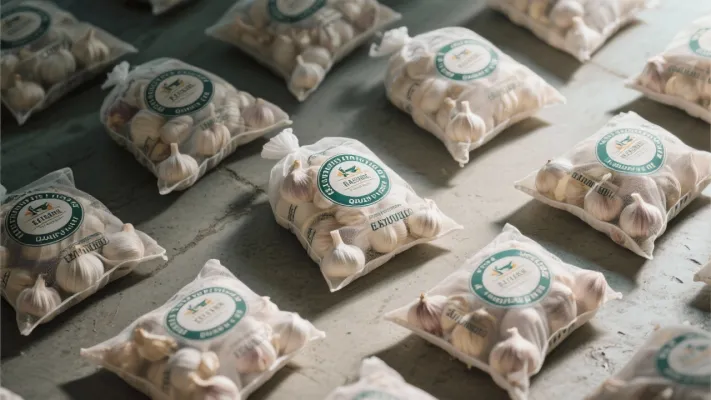
For garlic exporters shipping to Europe, mold during transit is one of the most persistent challenges—especially when humidity levels exceed 75% inside containers. According to a 2023 study by the European Food Safety Authority (EFSA), up to 12% of bulk garlic shipments from Asia suffer visible mold damage due to poor packaging and inadequate climate control. The good news? A well-designed 10kg net bag system can reduce this rate by over 65%, as proven in real-world logistics trials across Rotterdam and Hamburg ports.
The key lies in the micro-perforated netting used in modern 10kg garlic bags. Unlike sealed plastic sacks, these breathable bags allow airflow while maintaining structural integrity. In controlled tests conducted with Belgian importers, garlic stored in standard 10kg net bags showed an average internal relative humidity of just 62–68%, compared to 85–92% in non-vented alternatives. This difference alone cuts mold growth risk by nearly two-thirds.
| Packaging Type | Avg. Internal RH (%) | Mold Incidence After 30 Days |
|---|---|---|
| Standard Plastic Sack | 85–92% | 11.7% |
| 10kg Breathable Net Bag | 62–68% | 3.9% |
But it’s not just about moisture—it’s also about how you load and ship. Standardized 10kg net bags (typically 45cm x 60cm) fit perfectly on Euro pallets (800mm x 1200mm). In practice, this means you can pack 24 bags per pallet instead of 18–20 in irregular formats. That’s a 20% increase in space utilization and a direct reduction in handling stress during loading/unloading. Fewer drops = fewer broken bulbs, which translates to higher customer satisfaction and fewer returns.
When combined with proper stacking techniques—like using anti-slip mats between layers and securing with stretch film—the risk of physical damage drops significantly. One German buyer reported a 40% decrease in damaged goods after switching to our recommended 10kg net bag system for their monthly 5-ton garlic shipments.
Today’s European buyers don’t just want safe delivery—they expect sustainability. Our 10kg net bags are made from recyclable polypropylene, certified compostable under EN 13432 standards. By choosing this solution, you’re not only reducing spoilage but also aligning with EU Green Deal goals. Many B2B buyers now include "eco-friendly packaging" as a mandatory requirement in RFQs—this isn’t just nice-to-have anymore, it’s a competitive edge.
Get your free copy of our “Cold Chain Packaging Best Practices” guide—used by top garlic exporters in India, China, and Spain.
Download the Free Guide Now
 417
|
417
|
 cross-border农产品包装优化
10kg网袋包装优势
冷链食品物流效率
大蒜运输损耗解决方案
绿色低碳包装应用
cross-border农产品包装优化
10kg网袋包装优势
冷链食品物流效率
大蒜运输损耗解决方案
绿色低碳包装应用
 98
|
ginger health benefits
functional food ingredients
natural ingredient pairing
gingerol mechanism
food value-added strategy
98
|
ginger health benefits
functional food ingredients
natural ingredient pairing
gingerol mechanism
food value-added strategy
 387
|
Grade A white garlic quality
sprout-free garlic standard
premium garlic inspection methods
garlic storage technology
international garlic sourcing
387
|
Grade A white garlic quality
sprout-free garlic standard
premium garlic inspection methods
garlic storage technology
international garlic sourcing
 223
|
mesh bag packaging
garlic preservation
cold chain logistics
agricultural product transportation
ventilation packaging solutions
223
|
mesh bag packaging
garlic preservation
cold chain logistics
agricultural product transportation
ventilation packaging solutions
 197
|
garlic packaging solutions
net bag garlic storage
fresh garlic transportation
international cuisine garlic usage
foodservice supply chain efficiency
197
|
garlic packaging solutions
net bag garlic storage
fresh garlic transportation
international cuisine garlic usage
foodservice supply chain efficiency



.png?x-oss-process=image/resize,h_600,m_lfit/format,webp)




.png?x-oss-process=image/resize,h_200,m_lfit/format,webp)





 TikTok
 Facebook